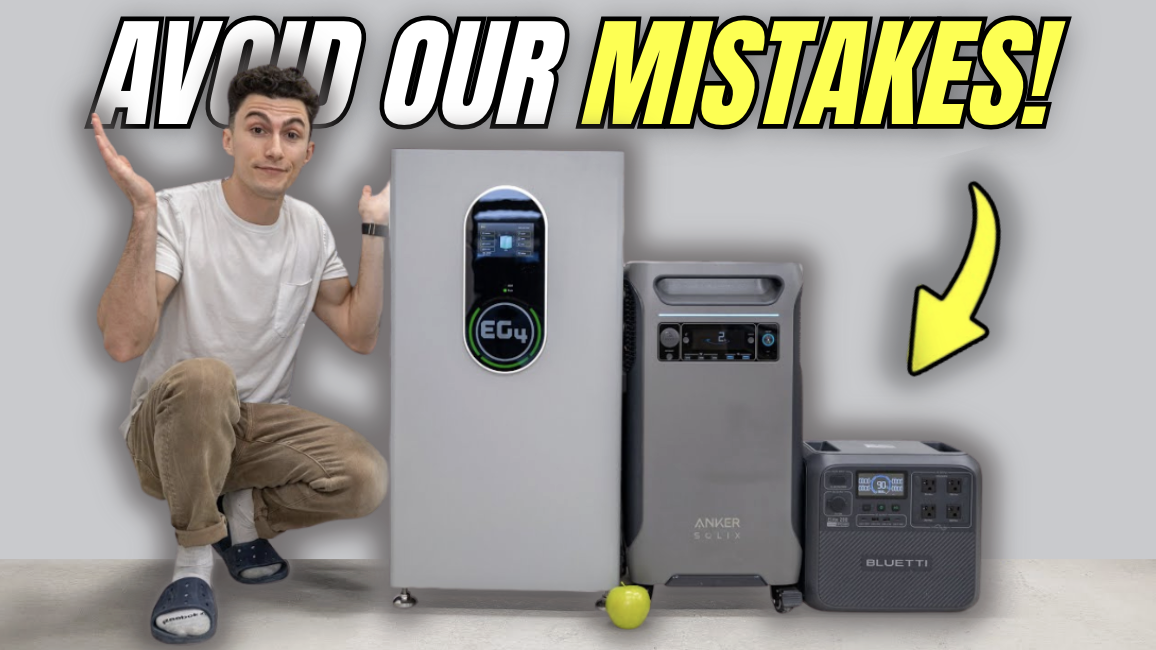
If we could jump in a time machine and give our past selves a crash course on solar power, we’d probably avoid a lot of frustration and some really costly mistakes. We still believe investing in solar is one of the smartest decisions you can make, but it’s really easy to have a few slip ups when you’re first starting out.
Here at The Solar Lab, we’ve tested a lot of solar equipment, built multiple solar power systems from scratch, and made plenty of mistakes along the way.
This guide will break down some of the things we wish we understood before we started buying solar gear. We want to help you avoid the mistakes we made, so you can save money and build a system that actually works for your needs.
There’s no particular order to this list, just a bunch of things we had to learn first-hand when we got started. If you can take anything from the following list, you’ll be more prepared for your solar power installation than we were when we first dived in:
One of the biggest mistakes we see from people who are just starting out is the failure to buy batteries for their new system.
Without batteries, you’re essentially wasting the power your solar panels generate. Why? Because without power storage, you can only use the power your solar panels generate in real time. This means:
Plus, using the electricity your solar panels generate without some sort of battery is almost impossible, as the output wattage will rarely match the requirements of your appliances and devices. Without batteries, not only would you be left in the dark once the sun sets or you run into a stretch of bad weather, you probably wouldn’t be able to run any of your appliances or devices even while the sun was hitting your panels.
It sounds pretty obvious, but your solar batteries store the power that your panels generate during the day, allowing you to use it when the sun isn’t shining. This means an uninterrupted power supply at night or during cloudy days. Think of it like having a savings account for energy: every watt you save today can be spent later when you need it.
If you don’t have an adequately sized battery bank, you’re basically forced to sell the power your system generates back into the grid as part of a net metering arrangement, or just waste it. Being able to use that free electricity yourself is always going to be more cost-effective than selling it at a reduced rate to the utility companies.
Investing in quality batteries or opting for a portable power station that has built-in battery storage is crucial. Not only does it increase your energy independence, but it also maximizes the return on your solar investment.
A lot of people assume the going solar is going to be too expensive, so they don’t bother even looking into it.
It’s true that costs used to be much higher in the past, so you needed a massive upfront investment to get started. Today, that’s become a bit of a myth. The truth is, you can start out small with a basic power station kit and a few solar panels, which won’t drain your bank account.
Affordable, all-in-one solar kits are now available through retailers like Shop Solar and Signature Solar that make going solar incredibly easy and affordable. Plus, these types of budget-friendly setups are incredibly simple, allowing you to enjoy free, reliable power almost immediately.
Today, you can start with:
Plus, most modern systems and components are also designed to be modular and scalable. This means you can invest in a basic setup now and expand it over time as your needs and budget grow. With prices dropping and efficiency improving, you can achieve a balance between cost and performance that fits your budget.
Honestly, one of our biggest regrets is not investing in solar equipment sooner.
Why pay someone else thousands of dollars to install your solar system when you can easily do it yourself? Plenty of solar kits today are designed with beginners in mind.
Not only are the components pre-wired and designed for plug-and-play compatibility, they come complete with detailed, step-by-step instructions that make installation really simple.
Even if the most complicated electrical work you’ve ever attempted was plugging in a coffee maker, there are all-in-one solar power station kits that you could easily handle.
Not only can installing your own solar power system save you thousands in labor costs, it helps you gain a deeper understanding of how your system works. That knowledge makes future upgrades, troubleshooting, and system optimization far easier.
On top of that, there’s always a huge sense of satisfaction that comes from knowing you built your own solar power system and are personally responsible for the free and independent electricity it generates.
Solar power systems can seem like a complex mess of panels, batteries, inverters, and cables. But once you break it down, you’ll understand that the core components are actually pretty simple.
At a basic level:
When we first started, we installed everything without actually taking the time to understand how each component worked and what purpose they were serving. That led to poor buying decisions, improper sizing of components, and unnecessary upgrades.
Eventually, we learned what each piece of equipment was doing, which made us realize just how many stupid mistakes we were making (and how much money we had wasted).
If you want a more in-depth breakdown of how a solar power system works, we recommend reading our guide: Basic Solar Components and How They Work
Trust us, learning the fundamentals is so much easier than you think.
Solar leasing and solar power purchase agreements might seem like an easy way to go solar, but they’re almost never the right option.
When you lease a solar power system, you’re essentially renting your property to a company rather than just owning the solar power system yourself.
Not only do you have zero ownership over the equipment being used on your property, you don’t even own the power it produces. Leasing also means you miss out on key benefits like government incentives and long-term savings.
Whether you pay cash or finance your solar power system, you own it. Ownership gives you complete control over your power, enables you to claim tax credits, and typically results in lower overall costs. You also get to enjoy the peace of mind that comes from knowing you have a backup power system you can rely on during a blackout or emergency.
Plus, if you go to sell your house, the solar power system will increase the value of your home, whereas a leased system would just complicate the sale.
Remember, solar equipment is now more affordable than ever. By cutting out the middleman and avoiding inflated installation fees or leasing arrangements that are designed to take advantage of you, you can affordably build a system that’s tailored to your needs.
One of the biggest mistakes you can make when investing in solar is not doing enough research. Many people assume solar equipment is so technical that it will always fly over their head, so they simply trust the first salesman they meet.
Luckily, there’s a wealth of beginner-friendly resources out there, including from really helpful YouTube channels like, ahem, The Solar Lab.
We already discussed how you should spend some time learning the basics of how everything works, but the same goes for reading and watching honest and informative product reviews. You always want to know that the equipment you’re buying is going to perform as advertised, and last long enough for you to see a return on that investment.
Basically, when it comes to solar, the more you know, the better equipped you’ll be to make smart investments. Remember, knowledge is power, especially when it comes to buying solar equipment!
Government incentives can dramatically lower the cost of going solar.
In the U.S., the Federal Solar Tax Credit, which can get you a 30% tax credit on the cost of your entire system. Even local rebates can help you save a couple hundred bucks here and there.
These incentives are designed to make renewable energy more accessible to homeowners. Depending on where you live, they could end up saving you thousands of dollars.
Taking advantage of these programs not only cuts your upfront costs but also speeds up how quickly you can see a return on your solar investment. Make sure to research what’s available in your area and factor these savings into your overall budget. Solar
We used to assume that as long as our solar panels were in the sun, they were working efficiently. Almost like a solar panel would magically produce its rated wattage no matter how it was installed.
In reality, even small adjustments in the tilt and orientation of your panels can have a significant impact on their efficiency and performance. The sun’s position changes throughout the day and across the seasons, so optimizing the angle of your panels can greatly improve efficiency and energy production.
Take the time to position your panels correctly. This becomes so much easier with the right solar panel ground mount.
We had our solar panels installed for almost an entire year before realizing we weren’t maximizing the output from our solar array. Don’t make the same mistake!
Another misconception that caught us early on was thinking that installing an off-grid solar power system meant we were completely disconnected from the utility grid.
In reality, “off grid” simply refers to a system that isn’t directly tied into the grid. They can still be used at your grid-connected primary residence as a backup or supplementary power source.
In fact, many homeowners choose to run an off-grid system alongside grid power, rather than combining the two as part of a hybrid system. Doing so can be done for the following reasons:
With this type of off grid solar setup, you kind of get the best of both worlds: you maintain your connection to the grid the same way as always, while your off grid system handles specific loads.
Not only is it less complicated installing these types of systems, as you don’t have to worry about any sort of grid integration, it’s an efficient way to manage energy consumption and maximize savings.
It sounds corny, but think of investing in solar power as a journey. Everyone has to start somewhere, so it’s okay if you feel a bit confused. Just by learning from our mistakes, you’ll be much better prepared than we were.
Start small, learn the basics, own your equipment, and don’t rush decisions you don’t fully understand. If you ever feel stuck or overwhelmed, that’s exactly what we’re here for.
Current Deals: https://signaturesolar.com/promotions...
Use Code: SOLARLABGET50 for $50 Off Your Order
Current Deals: https://shopsolarkits.com/collections...
Use Code THELAB for 4% Off Your Order
Explore more practical tips, guides, and insights to help you get the most out of solar
More Resources >