When we first dipped our toes into the world of solar equipment, we pretty much had no idea what anything was or how it worked.
Photovoltaic panels? Monocrystalline? Peak sun hours? It all just sounded like complicated jargon. If you’re feeling the same, don’t sweat it because we’re here to guide you through the terminology and explain how this stuff works.
Our aim isn’t just to help you understand how solar panels generate electricity, but also to make you more confident when it comes time to purchase your own panels. Let’s get started.
Before we jump into how they work, it’s worth taking a moment to explain what they are.
At first glance, they just look like sleek, shiny slabs of glass and metal. But there’s a whole lot going on inside them. Each solar panel is made up of numerous solar cells, and these are the real heroes of the operation. Basically, a solar cell is a mini power plant, designed to convert sunlight into electricity using some clever science.
Inside these cells, there’s a thin layer of semiconductor material (usually silicon). Silicon is perfect for the job because it’s great at conducting electricity, but it’s not the only material that can get the job done. However, for a basic explanation, understanding the different materials doesn’t really make a big difference.
Whether the panel’s solar cells are made up of monocrystalline silicon, amorphous silicon, or newer materials like cadmium telluride, the important thing to remember is that the solar cells and the materials inside of them form the backbone of solar panels and solar technology as a whole.
To make it easier to understand how they actually work, we broke the process down into bite-sized chunks, starting with the moment sunlight first hits a solar panel:
When the sun shines on the transparent surface of a solar panel, the rays (or solar radiation in science speak) pass through the panel and get absorbed by the solar cells.
It sounds odd, but when you’re talking about solar power, you should think of sunlight as a stream of tiny particles known as photons. Photons are packed with energy, and when they collide with the solar cells inside the panel, they transfer that energy.
Inside the photovoltaic cells, those photons knock loose some electrons in the semiconductor material. This is where the magic happens—the movement of these electrons creates an electric current.
The current produced is DC electricity (direct current), which flows in one direction. While this is great, most homes and appliances can’t use DC power directly. What they actually need is AC electricity (alternating current).
This is where your trusty solar inverter comes into play. It converts the DC power from the panels into AC power, which is what powers your fridge, TV, and that fancy coffee machine that sits on your counter collecting dust.
If you’re feeling confused, we have a guide that breaks these components down: Basics of Solar Components and How They Work
Once the electricity is converted, it can be used to run loads (your electronics), stored in batteries for later use, or sent to the grid for net metering purposes if you’re running a grid-tied system.
If you’re completely off grid, your power system will need to include a high-capacity battery bank, which you’ll use to store power for cloudy days, nighttime use, or basically any other time you need power.
The amount of power storage you’ll need will vary depending on your situation, but you can read our guide if you need help deciding: Sizing Battery Capacity for Your Solar Power System
Now that we’ve covered the basics, let’s talk about why solar power systems are becoming so popular, as well as the reasons why you should consider going solar:
The sun isn’t running out of energy anytime soon, making it one of the most reliable power resources on the planet.
Plus, unlike fossil fuels, solar power systems don’t produce harmful emissions, so they’re cleaner and better for the environment.
Even if you’re not an environmentalist, avoiding the noise and fumes you get when running a gas generator nonstop is a pretty strong argument for a solar panel system. With that said, a gas generator and portable power station together for backup power.
When you generate your own electricity, you’re no longer at the mercy of the utility companies and their unpredictable price increases. You also aren’t reliant on the grid for power, which means you won’t be left in the dark during blackouts, power failures, serious storms, or emergency situations.
Again, gas generators can be used as a source of independent power, but it’s worth remembering that you’re fully reliant on a fuel source to create that off grid power. If you run out of gas, you’re screwed.
Plus, it’s just pretty cool to be able to look around and realize that you’re running your entire home on nothing more than sunlight.
Speaking of free power, once your solar panel system is installed, you can start saving money right away by reducing (or even eliminating) your electricity bills.
This is why a lot of people like to think of a solar power system as an investment, rather than just a luxury purchase. Not only do they give you access to reliable, off-grid power, so you’re prepared for outages, they can save you serious money.
On top of that, pretty much any piece of solar equipment you can buy, including the solar panels, are designed to last decades, so they can fully pay for themselves over their lifespan.
You’ve probably heard the term “photovoltaic cells” quite a bit if you’re getting into solar.
But, what does it mean? Put simply, a photovoltaic cell is a thin piece of material designed to convert sunlight into electricity. The word “photovoltaic” literally means “light-electricity,” which sums up the process perfectly.
As mentioned above, most solar modules today use silicon solar cells because silicon is a highly effective semiconductor material. The two main types of silicon cells are:
Crystalline silicon, or more specifically, monocrystalline silicon, is seen as the gold standard for solar cell efficiency. It’s durable and highly effective at converting sunlight into power.
If you’re shopping for solar panels, you’ll often see it listed in the product name or description. This is because it’s a real selling point due to the inherent efficiency of the material. While they can be a bit more expensive, it’s usually money well spent.
Made from materials like amorphous silicon or cadmium telluride, these are lighter and more flexible, but usually less efficient. Some of the folding solar panels you’ll see paired with power stations and mobile setups are made using these types of photovoltaic cells.
Each type has its strengths and weaknesses, and solar engineers are constantly making progress in photovoltaic research and application to make these materials even better, which explains why solar panels are becoming cheaper, more efficient, and longer lasting.
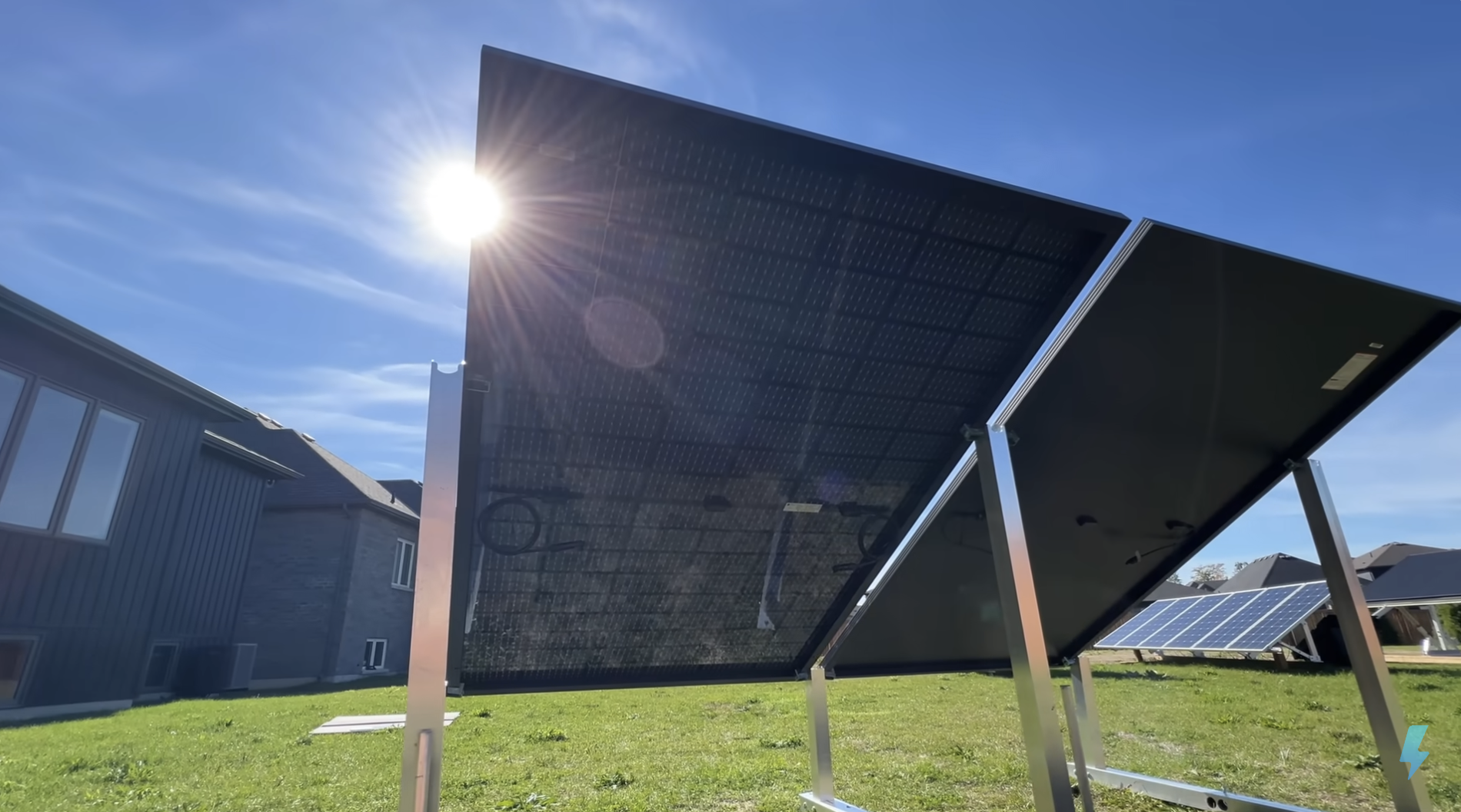
Another variation you’ll see when you’re shopping for solar panels is something called a bifacial solar panel. These have a higher efficiency design that enables the panel to capture sunlight from both the front and back sides.
This design allows them to generate more power than traditional monofacial panels by harvesting reflected light from surfaces behind the panel, like grass, snow, and rooftops. Because bifacial panels use advanced glass-on-glass or transparent backsheet designs, they also offer improved durability, better performance in low-light conditions, and higher overall energy yield, especially in more reflective environments.
The main takeaway is that bifacial panels can absorb sunlight on both sides. They’re pretty much just a more efficient variation of a monocrystalline solar panel.
If you want a deeper breakdown, we have a full guide that explains what they are and why we use them: Bifacial Panels Explains (And Why We Use Them)
Here’s something that’s important to remember: solar panels aren’t a “set it and forget it” kind of thing. The amount of electricity they generate depends on factors like the angle of incidence (the angle at which sunlight hits the panel) and location of the panel.
For example:
That’s why you’ll notice some of the advanced commercial operations use solar trackers to automatically adjust the position of the solar panels throughout the day. This ensures that they get maximum exposure to sunlight as the sun moves across the sky.
In fact, EcoFlow even developed their own Smart Solar Panel Tracker for residential applications. Honestly, it’s not worth anywhere it’s nearly $3,000 price tag, but the concept still makes a lot of sense.
Realistically, you’re much better off just taking the time to position your solar panels in a location that gets a lot of direct sunlight. You can then use an affordable and adjustable ground solar panel mount to angle them in a position that makes sense for where you live.
Let’s talk about solar cell efficiency. What we mean by this is how well a solar panel can convert sunlight into usable electricity.
It sounds low, but most panels today achieve average efficiencies between 15% and 22%. A higher efficiency means more power in less space, which is crucial for both large-scale solar farms and small residential systems.
Efficiency, surface area, and the number of photovoltaic cells a solar panel contains is where solar panel power ratings come from.
You’ll usually see a solar panel listed according to a wattage, like “100W Solar Panel” or “415W Solar Panel”. If you’re curious about what those numbers actually mean, this is the panel’s power rating.
The power rating on a solar panel tells you how much electricity it can produce under ideal conditions, which is measured in watts (W). For example, a 100W solar panel will produce 100 watts of DC electricity per hour if it’s exposed to full sunlight at its maximum power point. On the other hand, a 400W solar panel will generate four times that amount in the same conditions.
These ratings are determined through standardized tests using controlled sunlight, temperature, and the angle of incidence. But here’s the kicker: “ideal conditions” rarely happen in the real world!
The actual output will depend on factors like the amount of sunlight that hits the panel, the weather, the panel’s geographic location, and panel orientation.
That’s why a larger, higher-wattage panel is typically better if you have limited space and want to generate more power. But keep in mind, higher wattage also means a higher price tag. It’s all about finding the right balance for your budget and power needs.
Still, no matter what type of panels you are using, it’s important that you are using them in a location where they will receive the most sunlight possible. Even in less-than-ideal conditions, solar panels can produce power. Just make sure the surface of the panel is clear, and a solar panel can produce power on even the cloudiest days.
If you’re feeling confused, we put together a beginner-friendly guide on sizing solar panels for your system. It’s a good place to start.
If you’ve made it this far, you’re probably wondering, “Is solar worth it for me?” From our perspective, the answer is a resounding yes. Not overly surprising given that we call ourselves The Solar Lab, but that’s because we believe in this technology and the benefits it can offer.
Whether you’re interested in cutting your electricity bills, reducing your reliance on the grid, or just need power in a remote, off-grid location, a solar power system can be a game-changer.
And don’t worry if this all feels a bit overwhelming. We didn’t know what a photovoltaic cell or bifacial panel was when we first started either. Stick with it, solar equipment gets easier to understand once you really dive into it.
Signature Solar: https://SignatureSolar.com
Use Code: SOLARLABGET50 for $50 Off Your Order
Shop Solar: https://ShopSolarKits.com
Explore more practical tips, guides, and insights to help you get the most out of solar
More Resources >