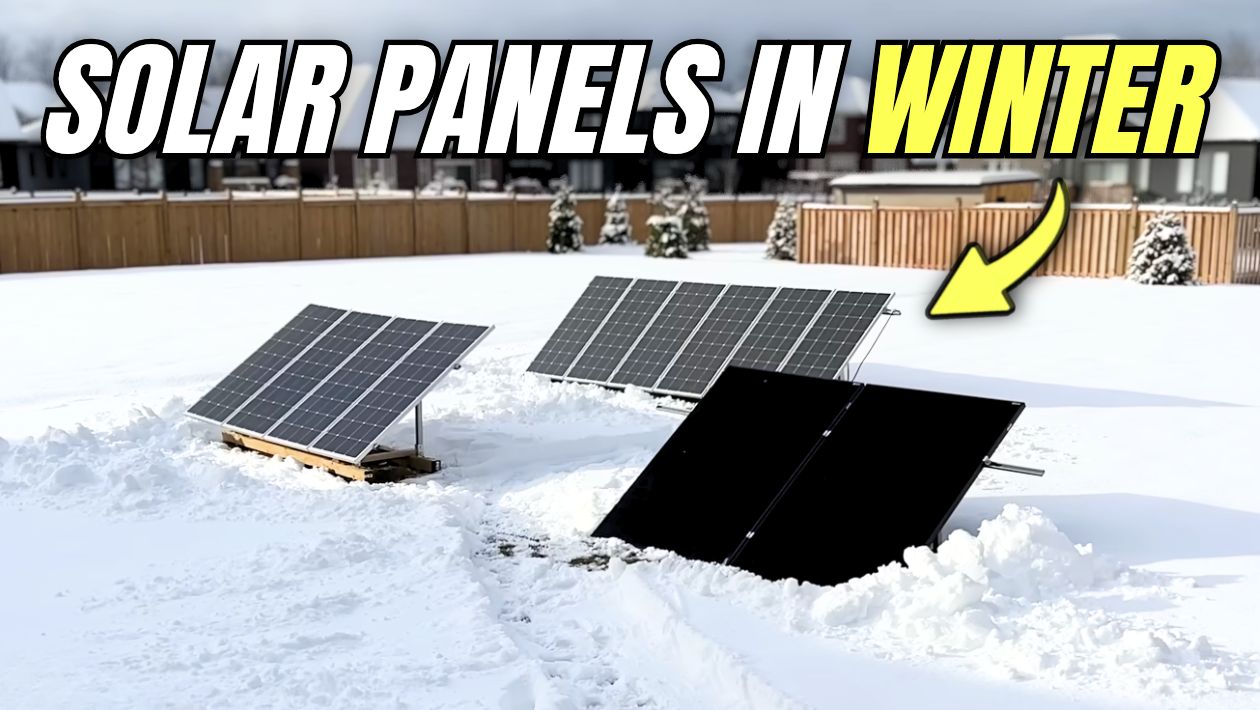
When the winter months roll in and the snow starts piling up, you wouldn’t be alone in wondering whether your solar panels are even doing anything out there. And, given that we’re located in a climate that experiences cold, dark winters with lots of snow, we’re not strangers to questions about solar panel performance during the cold and snowy months.
So, will solar panels work in winter? The short answer is that yes, solar panels do work in winter! But there is more to it than you may think.
This is why we’re going to explain everything you need to know about using solar panels in the winter. We’re going to cover everything from solar panel maintenance in the snow to panel performance when the temperature drops below freezing.
Let’s clear one thing up right away: your solar panels aren’t like hibernating bears during the winter months, they were designed to be year-round power sources. They don’t need heat to work, they just need sunlight.
In fact, even on the coldest winter days your solar panels can continue to convert sunlight into usable solar energy.
It sounds a bit crazy, but solar panels actually work better when they are cold. This is because the cold weather helps to keep the surface temperature of the panel down while it is generating electricity.
Basically, cold solar panels are more efficient than hot solar panels. The more efficiently the panel is able to function, the more solar electricity it will generate. With that said, the winter brings a few challenges that can impact their performance.
Your solar panels can get covered in snow and ice during the winter months, which can block their surface and prevent sunlight from getting absorbed into their solar cells. It sounds obvious, but think of it like having snow completely cover your windshield and expecting to see through it.
You also have to contend with fewer hours of daylight on winter days. Winter days are shorter, so your solar panels have a shorter window of opportunity to soak up sunlight and convert it into usable electricity.
Finally, the sun hangs lower in the sky during the winter, so your solar panels might not be able to capture as much light unless you adjust their angle to one that is more winter-appropriate.
While there are challenges to running a solar power system in the winter, the main takeaway is the fact that your solar panels are designed to keep on performing during the coldest and cloudiest winter days, even if they do require a little bit of extra care.
Solar panel maintenance is even more important during the winter than the summer months.
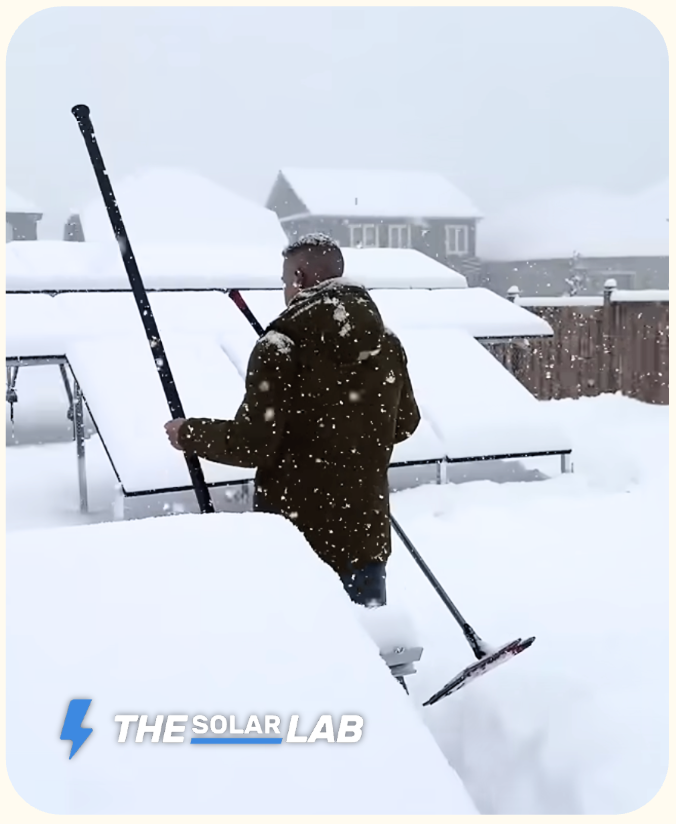
Naturally, if your solar panels are blanketed in snow, they won’t be able to soak up any sunlight. The safest method for clearing snow off your panels is using a soft-bristled snow brush.
In reality, snow is pretty easy to clear off the glass surface of a solar panel, especially right after it has fallen. In most cases, a gentle sweep with a soft brush will do the trick.
However, if you’re dealing with heavy, icy snow, or you have a big solar array that’s difficult to reach, you may need more specialized tools. There are specialized extendable solar panel brushes you can buy that will do the trick, but a DIY solution would also work.
While it’s tempting, avoid using a snow shovel to clear your solar panels, as you can easily scratch their glass surface this way. We’d recommend just staying on top of it. Get to the snow when it’s light and fluffy, rather than after it has had a chance to set and freeze.
Ground mounted solar panels are almost always easier to clear than their roof-mounted counterparts. If you do have a rooftop solar panel setup, we’d avoid using a ladder without a spotter. If it’s cold enough for your solar panels to be covered in snow, it’s cold enough for your ladder and roof to be icy and slippery.
We’ve personally found that solar panels tend to clear themselves of snow fairly quickly if left alone, so it’s not worth breaking your neck to do it. Thanks to their glass surface and dark color scheme, they tend to warm up quickly, so snow melts fast and usually just slides off. If it’s just a light dusting of snow, even the wind can be enough to blow the snow off your panels.
Another piece of good news is the fact that bifacial solar panels can actually get a bit of a power boost when it snows. Since sunlight can be collected on both the front and back surfaces of the panels, they can absorb sunlight that reflects off the snow.
If you’re building out a ground mount solar panel array, and you get lots of snow where you live, that alone can be a strong motive to invest in bifacial panels.
While the impact of snow is pretty easy to visualize and deal with, it’s also important to consider the reduced amount of daylight you get in the winter.
Not only are there fewer hours of daylight during the winter months, the sun also hangs lower in the sky. This isn’t something you can control; it’s just how mother nature rolls during the winter.
Naturally, less sunlight exposure means the total amount of energy your solar panels can generate in a day is reduced. But don’t worry, even with shorter days, those panels are still busy converting light into power, and there’s something you can do to help improve their efficiency.
Adjusting the tilt of your solar panels to better match the angle of the sun can make a huge difference. Since the sun is lower in the sky, rather than sitting directly above the panels for most of the day, you need to compensate for this. Just giving your solar panels a steeper tilt can help them capture more of that available sunlight.
Most solar panel ground mounts make seasonal angle adjustments easy, so you can quickly fine-tune the angle for maximum efficiency as the fall turns into winter.
As a general rule, adding 15° to your latitude during winter (and subtracting 15° from your latitude during the summer), will give you a reasonably effective solar panel tilt.
Let’s say the best summer solar panel angle for where you live is 30°, you’d want to increase that angle by 15° during the winter, so your winter panel angle would be 45°.
If you’re unsure where your solar panels should be angled, Shop Solar offers a handy solar panel tilt angle calculator, which gives you your ideal angle according to the time of year and your zip code or city. Since it provides seasonal and monthly optimal tilt angle recommendations, you can really adjust your solar panels to maximize their efficiency.
It may seem annoying, but adjusting the angle of your solar panels is a job that takes less than an hour, but it can also increase the efficiency and output of your panels by as much as 20%. This means your solar power system can generate 20% more free electricity all winter long!
Keeping your solar panels working to their full potential during the winter isn’t difficult, but it requires a bit of preparation and maintenance. Here’s a quick checklist you can follow to make sure your solar panels work in winter:
Keep an eye on the forecast and clear snow as quickly as you can when it falls. Just like clearing your vehicle’s windscreen, the faster you clear the snow and ice, the easier it will be. Plus, the faster you get that snow off your solar panels, the more power they’ll be able to generate.
If you haven’t already, consider a mounting system that allows for easy seasonal angle adjustments, like the hugely popular EG4 BrightMount Adjustable Solar Panel Mount or the adjustable version of the IntegraRack IR-30 Panel Mount.
At a minimum, we’d recommend adjusting the angle at the start of winter, but for optimal performance, you should adjust the angle on a monthly basis throughout the winter and the rest of the year.
The cold temperatures and ice can sometimes dislodge electrical connections. It’s always a good idea to make sure all of your wiring is secure at the start of the winter. You can do this again in the spring to make sure everything still looks good.
Using your inverter’s display screen or smart app, keep an eye on how your system is performing throughout the winter. If something seems off, you can address the situation before it has time to significantly impact your winter solar power production.
So, do solar panels work in winter? Absolutely!
Between improved efficiency in cold weather and the power boost bifacial panels get from reflected snow, the winter months can continue to be a great time to generate solar power.
Even with the snow, shorter days, and lower sun angles, they continue to generate power, even if you have fewer hours of sunlight. Just remember to clear snow when you can and optimize the solar panel angle ahead of time.
With a bit of basic maintenance and some seasonal adjustments, winter won’t slow your solar power production down nearly as much as you probably think it will.
Signature Solar Panels: https://signaturesolar.com/solar-panels
Signature Solar Ground Mounts: https://signaturesolar.com/solar-ground-mounts
Use Code: SOLARLABGET50 for $50 Off at Signature Solar
Shop Solar Panels: https://shopsolarkits.com/solar-panels
Shop Solar Ground Mounts: https://shopsolarkits.com/solar-ground-mounts
Use Code THELAB for 4% Off at Shop Solar
Explore more practical tips, guides, and insights to help you get the most out of solar
More Resources >