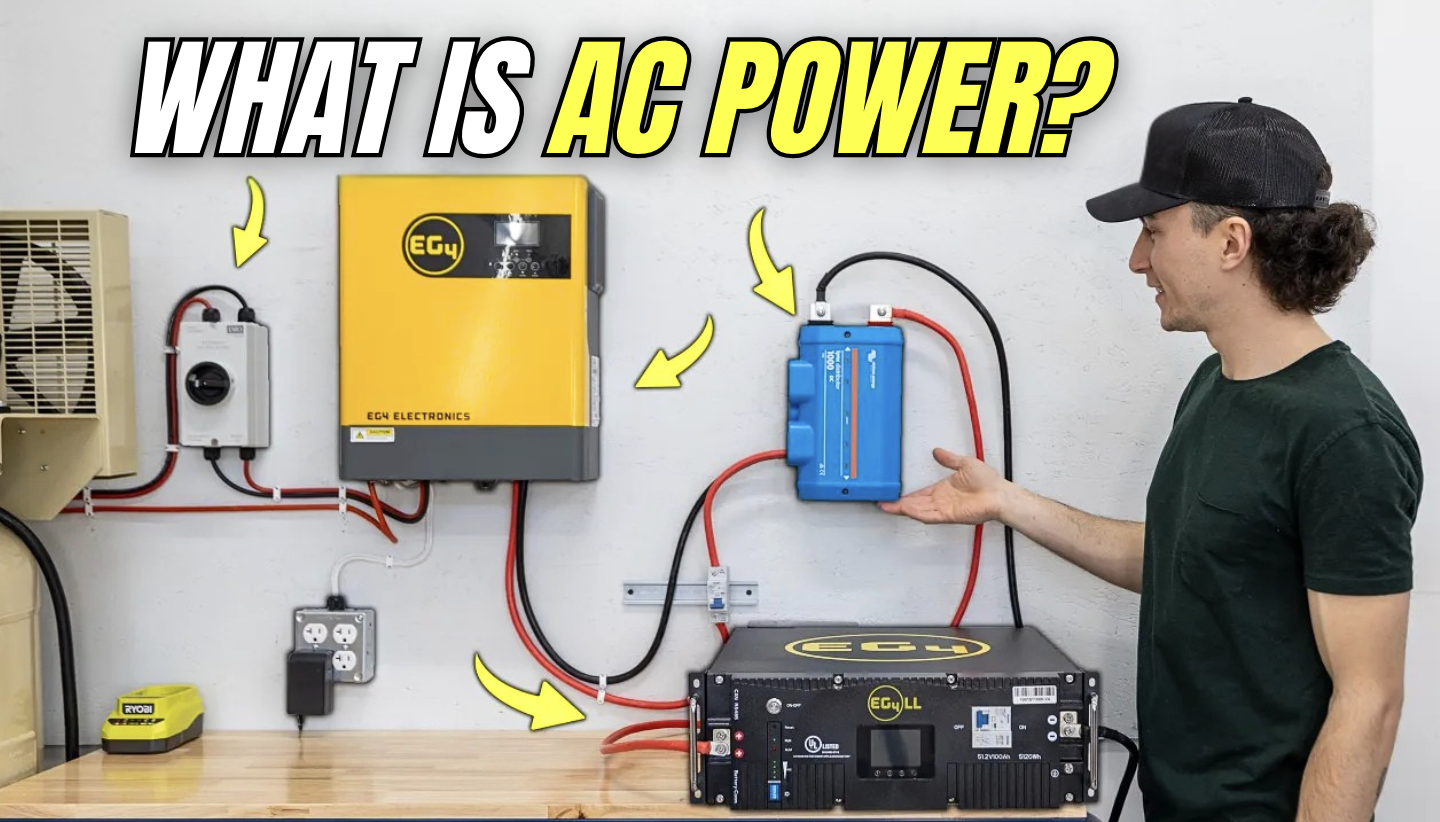
We explained about how direct current (DC) is the lifeblood of solar power in a previous article, but now it’s time to talk about its less stable cousin: alternating current (AC power). This is the type of power that flows from the wall outlets in your home. It powers your fridge, air conditioner, washing machine, and pretty much every other appliance you own.
But why do so many solar power systems produce alternating current electricity when solar panels generate DC power? And how does it all fit into your own solar setup? We’re going to break it all down in the most straightforward way possible.
Alternating current, or AC power, is a type of electricity where the flow of electrons constantly switches directions. Instead of moving in one continuous stream like DC power, AC flips back and forth between 50 or 60 times per second, depending on where you live (60 times in the United States, which is why you’ll see ‘60Hz’ listed on U.S. power adapters).
Think of it like a playground swing: the current moves one direction, then the other, then back again, all day long. This back-and-forth motion is why it's called alternating current.
But why do we use this less stable type of power to run most of the electronic devices and appliances in our homes? The answer is simply because it’s better at traveling long distances than the more stable DC power.
The power grid can send AC power across hundreds of miles with minimal energy loss, which is something DC just isn’t as good at. Again, this is why your home, appliances, and pretty much every building connected to the grid will run on AC power.
If you haven’t had a chance to read it, our DC power article explains how and why solar panels generate direct current (DC). So, if your house runs on alternating current electricity, but your solar power system is generating direct current electricity, that means we need a way to convert DC into AC.
That’s where your solar power inverter comes into play. A solar inverter pulls the DC power that your solar panels generate and your solar batteries store, then flips it into AC power so your appliances and devices can use it.
Not only do most of the electronics in your home need AC power, grid-tied solar systems also need to be AC-based, as AC power is the only type that the grid will accept for net metering purposes.
But here’s the twist: not every type of electronic device needs AC power. The rechargeable batteries in a lot of modern electronics, portable solar generators, and a lot of camping and RV appliances are designed to run on DC power.
That means when you charge up your phone or laptop, the power goes through an alternating current to direct current converter (a.k.a. that chunky power brick you may have noticed attached to your phone or laptop charger) to switch it back to DC.
It's almost like you’re playing hot potato with power conversions, but that actually poses some problems, as each conversion process actually uses power. Not only does running the power inverter draw power, which can be an issue if you’re running completely off-grid and have limited stored power, you also lose some energy through heat loss.
When we’re talking about power stations, we actually measure these efficiency losses as the idle draw. The best units waste less power during this power inversion process.
This is actually the main reason why some people running fully off-grid solar power systems are starting to embrace DC-powered appliances, but we’ll explain that in more detail in the next section.
Back in the late 1800s, there was a bit of a nerd battle known as the War of the Currents. On one side, you had Thomas Edison, the champion of DC power. On the other, you had Nikola Tesla and George Westinghouse, who both pushed the benefits of AC power.
Edison tried everything to prove that alternating current electricity was dangerous, even electrocuting an elephant in a publicity stunt (not his best moment). But in the end, AC electricity won because it was cheaper and more efficient for long-distance transmission, making it the obvious choice for utility companies looking to build out the power grid.
Fast forward to today, and like we hinted at above, we’re starting to see a bit of a DC renaissance with the rise of residential and off grid solar power systems. Off grid power systems that rely on solar panels and battery storage are now being paired with home appliances that can run on DC because it’s more efficient.
If you don’t have to convert the DC power generated by your solar panels and stored inside your solar batteries to AC power in order to run your appliances, less power needs to be used by your inverter. This means the entire solar power system makes more efficient use of the free solar power it is producing.
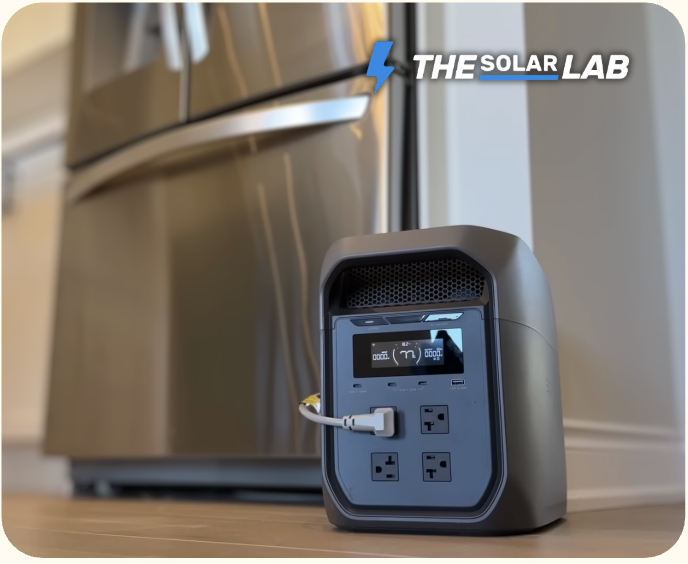
Even a setup as small as a portable power station paired with solar panels is going to lose power during the conversion process that happens inside the unit’s built-in inverter.
In fact, this even occurs when you’re not actually pulling power from the power station’s battery, as the inverter drains power just staying on, as it always wants to make sure that it’s ready to output the AC power you need when you plug something in.
This phantom power drain is what we call idle power consumption, and it’s the reason why we suggest choosing an efficient power station as well as turning its inverter off whenever you don’t need it.
But if DC is so great, why don’t we just switch everything back to running on DC power? Aside from the fact that it would require rewiring the grid for the entire country and most of the planet, most of the things we use today are designed to run on AC power.
So yeah, AC isn’t going anywhere, but those dedicated to off grid solar power can certainly benefit from making the switch to DC appliances.
While there are four main types of solar power systems, most solar setups follow one of two main designs:
Your panels generate DC power, which is stored in your battery bank.
When you need to use that power, your inverter converts it to AC. Your house and all of the appliances and electronics inside of it then run on that freshly converted AC power just like they normally would if you plugged something into a standard wall outlet.
Extra solar energy can then get sent to the grid as AC power, allowing you to earn credits on your bill through net metering.
Like any solar power system, your solar panels generate DC power. Your solar batteries then store that DC power. When needed, an alternating current system (inverter) converts it to AC so any household appliances you have can run on it. Some appliances (like DC refrigerators or LED lights) run straight off DC to avoid conversion losses.
Again, if you’re going off-grid, using more DC-powered appliances can help cut down on energy waste since you won’t be converting power back and forth so much, but it’s not required. But for grid-tied homes? AC still runs the show.
Even if you’re not willing to go out and spend thousands of dollars switching all of your household appliances to DC versions, there’s still a lot you can do to make sure you are using your off grid power more efficiently. We recommend reading our guide: How to Avoid Common Backup Power Mistakes.
AC power is what makes our modern electrical grid possible, but when it comes to solar, direct current, or DC power, is the real MVP. That’s why every solar setup involves converting DC into AC (or sometimes back again, just to make things extra complicated).
It sounds really complicated, but the main takeaway is that most of your appliances use AC power, but your solar power system generates DC power, so you need an inverter to make your solar power usable. If you can avoid needing to do that conversion process, your entire solar power system can be more efficient.
If you’re still feeling a little bit confused about what terms like AC power and DC power mean, you can watch our Basics of Solar and Electricity Video, where we explained solar terminology in the least confusing ways possible.
Signature Solar: https://signaturesolar.com/solar-kits...
Use Code: SOLARLABGET50 for $50 Off Your Order at Signature Solar
Shop Solar: https://shopsolarkits.com/solar-power-systems...
Use Code THELAB for 4% Off Your Order at Shop Solar
Explore more practical tips, guides, and insights to help you get the most out of solar
More Resources >