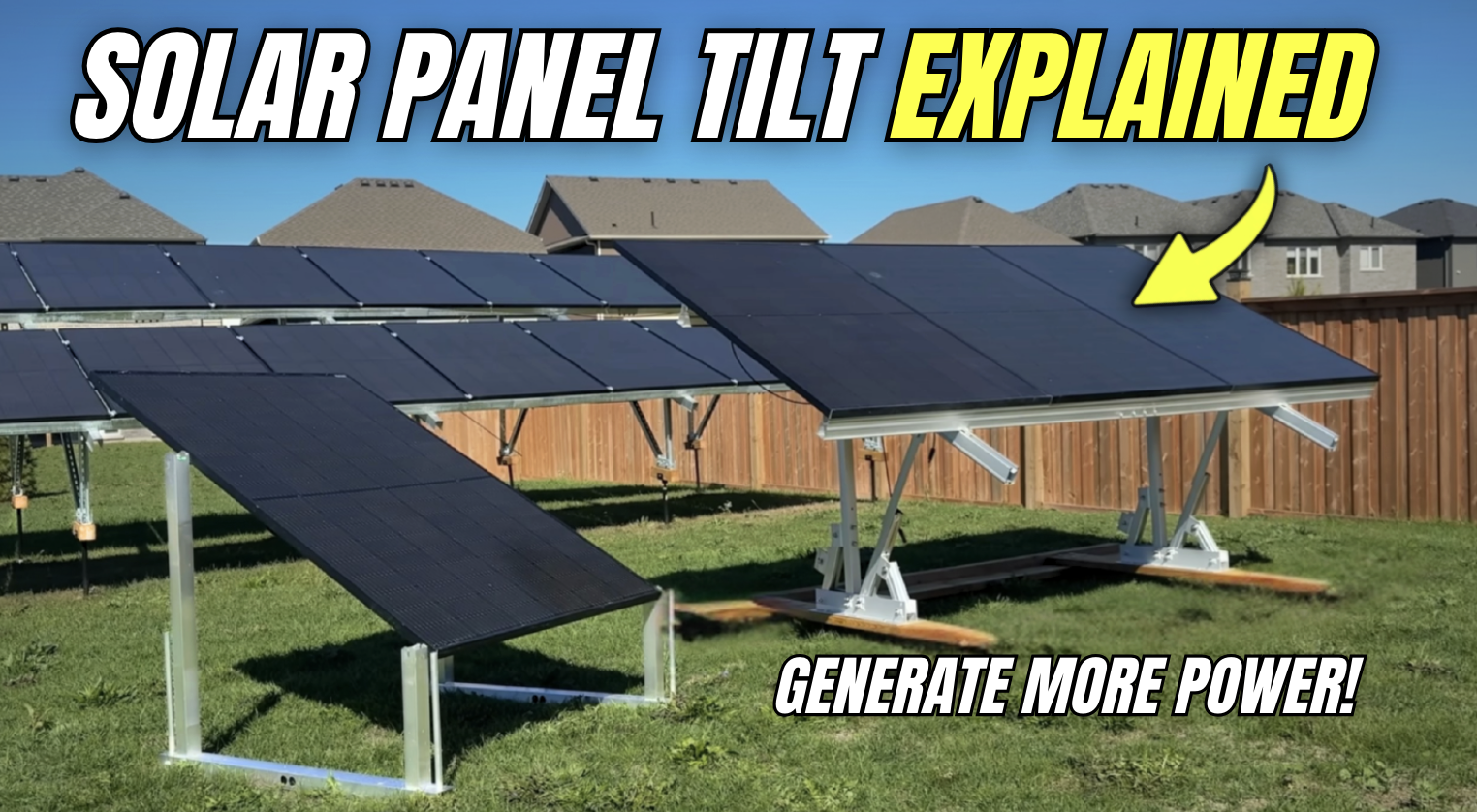
Optimizing your solar power production isn’t just about having the most efficient panels or a bigger solar panel array, it’s also about getting the angles right. If you plan on using solar panels at home, the tilt and direction of those solar panels can have a huge impact on the amount of sunlight they’re able to capture. This also means how your solar panels are positioned determines how much power they will generate throughout the year.
When we first got started with solar, we had to learn for ourselves that even small adjustments can lead to improvements as high as 20% in power production. This took lots of trial and error, but we want to help you skip this step and get the most out of your solar power system as quickly as possible.
That’s why we’re breaking down everything you need to know about moving and angling your panels for maximum performance.
The fact that solar panels need to face the sun to capture its energy might seem like a pretty obvious statement, but it also means that their tilt and orientation are really important factors when it comes to assessing their power production.
A common mistake a lot of people make is assuming that the only thing that matters is having your solar panels sitting in the sunlight. While it’s a good start, the angle that sunlight hits the panels directly affects how much energy they generate. The optimal solar panel angle also depends on your geographic location and the time of year.
The sun’s position in the sky changes with the seasons and throughout each day. In the summer, the sun sits higher, while it hangs lower during the winter months. This seasonal shift means that the ideal tilt for your panels isn’t always the same. In fact, it changes month to month, which is why a lot of people will reposition their panels and adjust their tilt at several points throughout the year.
A lot of homeowners don’t realize that being even a few degrees off your optimal solar panel angle can reduce your system’s efficiency and electricity production by as much as 20%.
Having your system produce 20% more free solar electricity is not something to look past, especially when it’s super easy and costs nothing to achieve.
With significant solar power gains on the line, it’s important that you take the time to angle your own solar panels correctly.
This is where tools like Shop Solar’s Tilt Angle Calculator for Solar Panels can really come in handy. This free solar panel tilt calculator provides you with the best angle and orientation for your panels each month according to your zip code.
There are other tools out there, but we find that one helps take the guesswork out of any sort of solar panel angle calculation and ensures you’re always capturing the most sunlight possible each season.
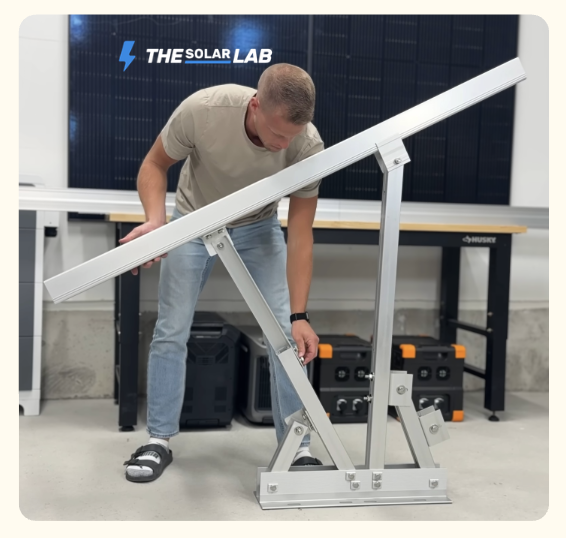
Again, it’s important to remember that the sun’s angle isn’t fixed. To maximize your energy production, you might consider reorienting your panels at least a few times a year. Personally, we try to do so at least three or four times a year, and thanks to our huge solar panel setup, we already produce more power than we need.
If you have a solar mount or racking system that allows for seasonal adjustments, like the Maple Leaf Goose Solar Mount, you can fine-tune the tilt at the start of the summer and winter months to maintain efficiency.
Even just this simple manual adjustment a couple of times a year can make a really noticeable difference in your overall solar power production. If you don’t have an adjustable solar panel stand, you can even just physically move the entire mount throughout the year to make sure it’s in a good position.
While this might sound like extra work, trust us, the boost in performance and energy savings more than justify the effort.
Ideally, you’d make adjustments every single month to optimize where your solar panels are positioned in relation to the angle of the sun in the sky. But honestly, that’s too much extra work for most people (us included).
For the majority of people, just making a quick adjustment at the beginning of each season can make a huge difference. If you want to improve solar production, but also want a relatively hands-off approach to running your solar power system, even making adjustments only at the start of the summer and winter will help. That’s just twice a year for some pretty major benefits.
While the difference is less prominent in the shoulder seasons, during summer months, a shallower tilt can really help you capture the intense, high-angle sunlight, while in winter, a steeper tilt is more effective for capturing the low-hanging sun.
When it comes to adjusting your panel tilt, the type of solar panel installation you have gone with will play a big role.
Mounting solar panels on a roof can be a bit of a hassle because you’re stuck with the roof’s fixed angle, and any adjustments require climbing up and potentially risking your safety, especially during winter.
On the other hand, a solar panel ground mount offers a lot more flexibility. With an adjustable ground mount, you can easily change the tilt and orientation of your panels without the need for climbing up a ladder.
Since a lot of these solar mounts and racks have built-in tilt adjustment hinges and angle finders, you can quickly and easily adjust their angle. Some even come with caster wheels, allowing you to alter the entire direction and position of the mount. If your solar panels are covered by shade, you can just move them.
This adjustability means you can achieve the precise angle your solar panel system needs throughout the year, which is why ground mounts tend to be the top choice for those who want to squeeze every watt of energy from the sun.
In other words, not only are ground mounts cheaper to buy and easier to install, you can usually use them to capture more energy over the lifespan of the solar panels you attached to them.
There are tons of solar panel racks and mounts on the market. We’ve tested a bunch of different options, and while some are great, there’s also a lot of flimsy garbage out there.
You can watch and read all of our ground mount reviews, but we’d also recommend checking out Signature Solar. They carry a good selection of high-quality solar ground mounts, including incredibly popular and budget-friendly options, like the PowerRack and IntegraRack IR30 Mounts.
You can also take a look at Shop Solar’s solar panel mount collection. They also carry incredibly popular options, like the EG4 Solar Panel Ground Mount. While it goes in and out of stock, it’s as popular as it is for a reason.
There are plenty of other high-quality mounting systems out there, but we find the best options are those that were designed to make adjustments simple. It’s also important that you choose a mount that was built to withstand the elements.
You don’t need to understand the science to enjoy the benefits that come with properly angling your solar panels. But if you’re curious, here’s a dumbed down version of why it matters:
Sunlight hits your solar panels in the most effective way when the panels sit perpendicular to the sun’s rays. If your panels are too flat or too steep, you lose out on valuable energy capture, as the sun is not getting absorbed by the solar cells within the panels as efficiently as possible.
The concept of solar panel angle calculation comes into play here. By knowing your latitude and the position of the sun relative to you at any given time of the year, you can determine the optimal solar panel angle to maximize sunlight exposure on the surface of your panels.
Let’s say you lived somewhere like San Diego, where a solar panel installed at a 20° angle might be ideal during the summer, as the sun sits high in the sky during these months. In the winter, you would need to increase the angle to something like 40° to 50° to capture the lower-angled sunlight.
Sounds kind of boring, but the physics is fairly simple, and it can help you produce more power and save more money.
Basically, when the sun is directly overhead, the intensity of the sunlight is at its peak. However, as the sun moves lower in the sky, the same amount of light is spread over a larger area, reducing its intensity. Adjusting the tilt compensates for this, ensuring that the light is concentrated on your panels as much as possible.
Investing time into finding the best solar panel angle for your setup is one of the simplest ways to improve your system’s efficiency without adding any sort of additional costs.
This is great news for those building a DIY solar power system on a tight budget, as understanding and applying these principles can lead to significant savings over the life of your system, without you needing to spend any extra cash.
You don’t need to rush out and buy some sort of automatic sunlight tracking system, like the overpriced EcoFlow Solar Tracker, to get the most out of your solar panels. Just take the time and put in the effort to make sure they’re adjusted properly throughout the year.
The tilt and direction of your solar panels can be the difference between a system that barely meets your needs and one that exceeds them. Taking advantage of basic solar angle calculators and opting for a flexible, adjustable ground mount can help you make sure that your panels are always working to their full potential.
Whether you’re adjusting your home’s solar panel array to increase efficiency, or just setting up a few folding panels for a weekend camping trip, take the time to get your angles right. It’s a small detail that can make a big difference!
Signature Solar Panels: https://signaturesolar.com/solar-panels
Signature Solar Ground Mounts: https://signaturesolar.com/solar-ground-mounts
Use Code: SOLARLABSAVE50 for $50 Off at Signature Solar
Shop Solar Panels: https://shopsolarkits.com/solar-panels
Shop Solar Ground Mounts: https://shopsolarkits.com/solar-ground-mounts
Use Code THELAB for 4% Off at Shop Solar
Explore more practical tips, guides, and insights to help you get the most out of solar
More Resources >