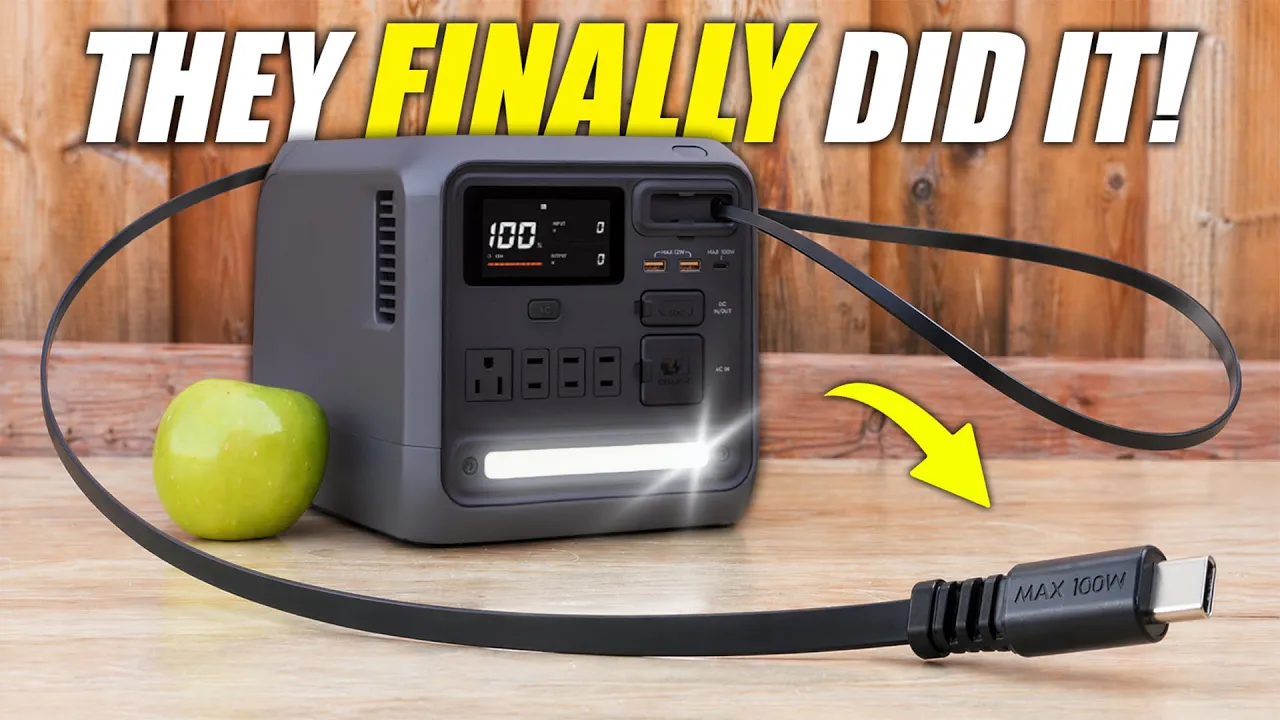
Even though DJI is mostly known as being one of the leading drone brands, they’ve quickly become a serious brand in the portable power station space. Over the past two years, they’ve released several power stations, including the compact DJI Power 500 and the powerful DJI Power 2000.
True to DJI’s reputation for extensive R&D and only releasing high-quality products and accessories, all of their power station releases have been impressive. That’s why we were so excited to test the new DJI Power 1000 Mini for ourselves.
Marketed as the most compact 1kWh power station available anywhere, it’s clearly aimed at those who need off-grid power on the go, or for settings where space is at a premium, like home offices and studios.
So, the big question: is this compact unit actually one of the best small DJI power stations yet. or is it just another “smallest-in-class” claim in a crowded market? Let’s find out.
Before we jump into our own experiences with this compact power station, let’s take a look at what it’s supposed to offer:
{{review-summary}}
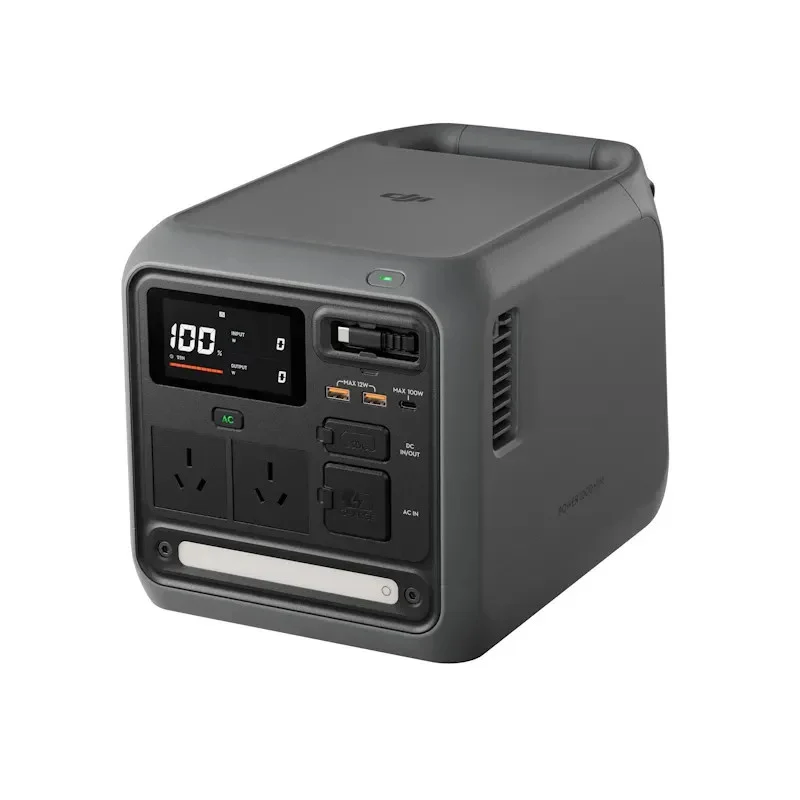
Right out of the box, the Power 1000 Mini feels like a natural extension of DJI’s ecosystem. It borrows heavily from the design of previous units, like the original Power 1000 units. It has the same clean lines, a bright display, and that signature DJI polish.
At just 25 lbs, it’s lighter than the original Power 1000, which weighed in at just 28 lbs. However, it’s not the weight that is the big difference here, it’s how compact they were able to make it.
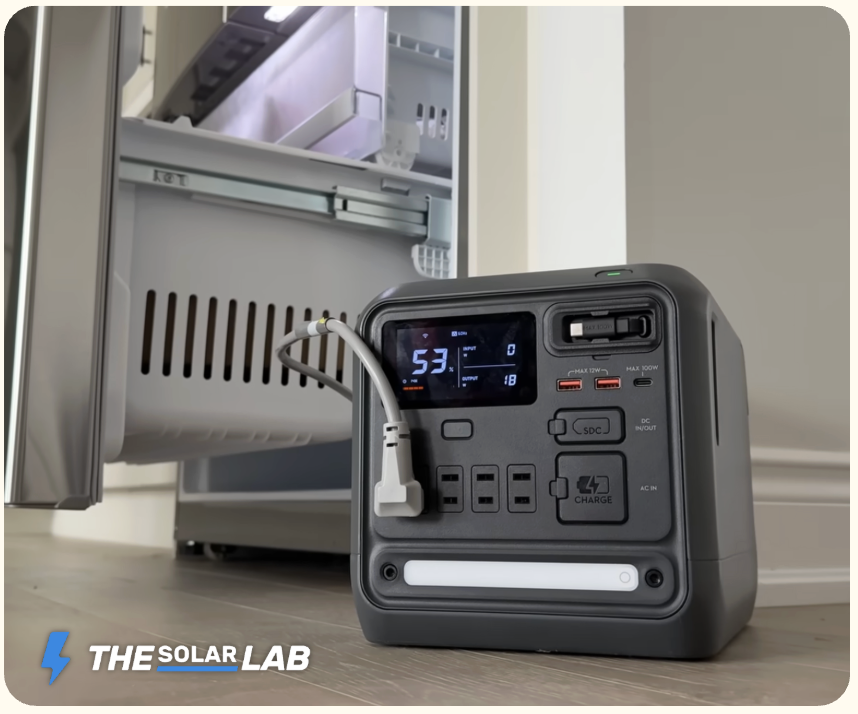
It is surprisingly small for a unit with its battery capacity, and actually looks more like the DJI Power 500 than the original Power 1000 or the Power 1000 V2.
Right away, this feels like the type of power station that you’ll actually want to keep on a desk, bring with you in your car, or even take to remote shoots and work sites.
DJI didn’t just make this thing smaller and more portable, they also added a few thoughtful upgrades, including a built-in light (finally) and a retractable charging cable. We’ll jump into these features in more detail below, but they are useful additions that we think could make a big difference when it comes to real-world use.
Finally, like all of the other DJI power station releases, this unit is also incredibly quiet.
Speaking of other DJI power station releases, the names can be a bit confusing. I mean, they’ve only released five power stations, and three of them now have “Power 1000” in their names, so here’s how the Power 1000 Mini fits into the lineup:
While it seems like DJI is hyper-focussed on building units with 1kWh of battery capacity, it somehow works. Each release either feels like an improvement on a prior release, or something that is different enough to satisfy a particular niche.
With the DJI Power 1000 Mini, you’re getting a non-expandable unit with a battery capacity and inverter output that makes it ideal for charging portable electronics, like phones, laptops, cameras, and drones. It’s also significantly smaller than the other Power 1000 units, so that will be really useful for certain people.
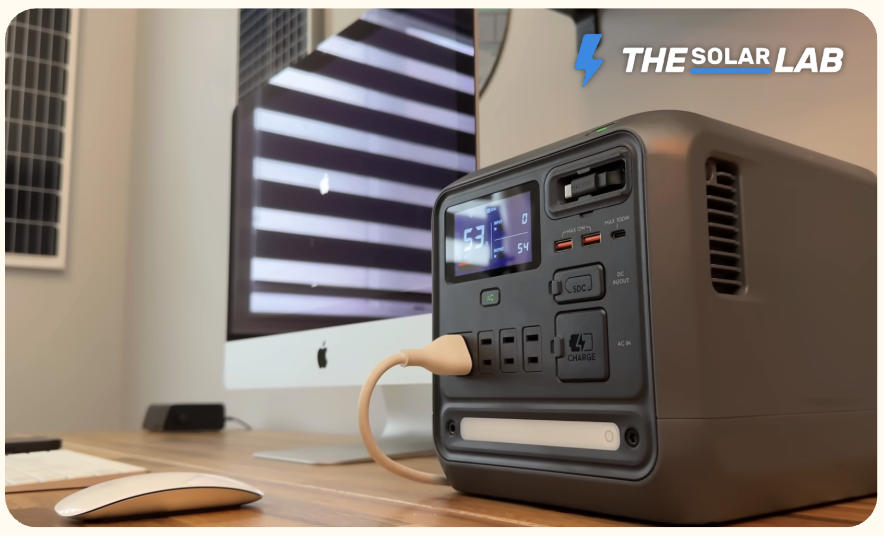
Even compared to similarly sized units from DJI’s competitors, like the Bluetti Elite 100 V2 or EcoFlow DELTA 3 Classic, the DJI Power 1000 Mini feels like it would be more suitable for office work.
It’s whisper-quiet, compact, lightweight, and just has that build quality we have come to associate with the DJI brand.
Now that we’ve covered the specs and our first impressions, let’s take a look at all of the things we liked about this compact DJI power station:
Like other DJI power stations, this small unit ended up being really efficient. In our testing, we were able to measure the efficiency at 95%, which is exceptional for a portable unit. We normally give an A grade to any unit that can deliver an efficiency rating over 80%, so passing 90% is genuinely very impressive.
In practical terms, that high efficiency means more of the power stored inside the battery is usable. You get longer runtimes, and that’s something that matters a lot whether you're using it for backup power or any sort of off-grid power.
It also charged faster than expected, going from empty to full in about 1 hour and 17 minutes. Not only is that really handy for day-to-day use, it also means the Fast-Charge Mode that you can access through the smart app actually works. Honestly, AC charging at 1,000W when your power station only has a 1,008Wh battery is pretty crazy!
It sounds simple, but even stuff like having a built-in light is incredibly useful, especially during outages.
Whether you’re troubleshooting cables or just navigating a dark room, this feature adds real value. DJI didn’t just tack it on either, the light includes an SOS mode and charging indicators. Plus, it’s actually bright enough to make a difference when you’re using it in a dark room or around a pitch-black campsite.
The DJI app also works really well, and you have the option to connect to it via Bluetooth or Wi-Fi. Even the built-in retractable USB-C cable is a feature we’ve only ever seen on small power banks, but it’s something we think would be really practical in the real-world.
If you're looking for a UPS for office setups, this unit shines. You can plug your computer into it, and if the power cuts out, it seamlessly keeps things running. If you lose power while you’re working, you don’t have to worry about lost files and interruptions. Plus, it’s small enough it can easily sit on your desk, without feeling like an annoying burden.
Like any good UPS power station, it also has a reasonably low idle draw. We measured the idle consumption at just 10W per hour, which is pretty reasonable. If you had the AC inverter on, but weren’t actively drawing power from it, the unit would last about four days. Again, that’s actually really good for a 1kWh power station.
These same strengths also make it a practical option for condo and apartment dwellers where space may be at a premium.
We already mentioned that this thing is extremely quiet, which is a bit of a theme with DJI power stations, but it’s worth pointing out again.
Given they’re a drone and camera equipment brand, it’s not overly surprising that DJI’s target market is photographers, videographers, and other creators. So, making their power stations quiet makes sense.
When you combine that quiet operation with this unit’s compact design, it becomes clear that it would be ideal for filming in a studio, working in an office, or using anywhere indoors where you can’t have the constant hum you get from a lot of other power stations.
While there was certainly a lot to like about this unit, no power station is perfect, and the DJI Power 1000 Mini is no exception.
After running it through plenty of tests, here are a few of the areas where we think the design could be improved:
DJI says this unit has a built-in MPPT, which is great, but for some weird reason, you still need an adapter to connect it to solar panels. That kind of defeats the purpose of having the MPPT built-into the unit in the first place.
To make matters, we found it very easy to push the solar adaptor beyond its rated solar input rate. Even going slightly these limits ended up damaging the adaptor to the point that it didn’t work anymore.
If DJI wants to compete seriously with brands like EcoFlow or Bluetti in the solar generator space, outfitting their power stations with a standard solar input, like an MC4 or XT60, is a must.
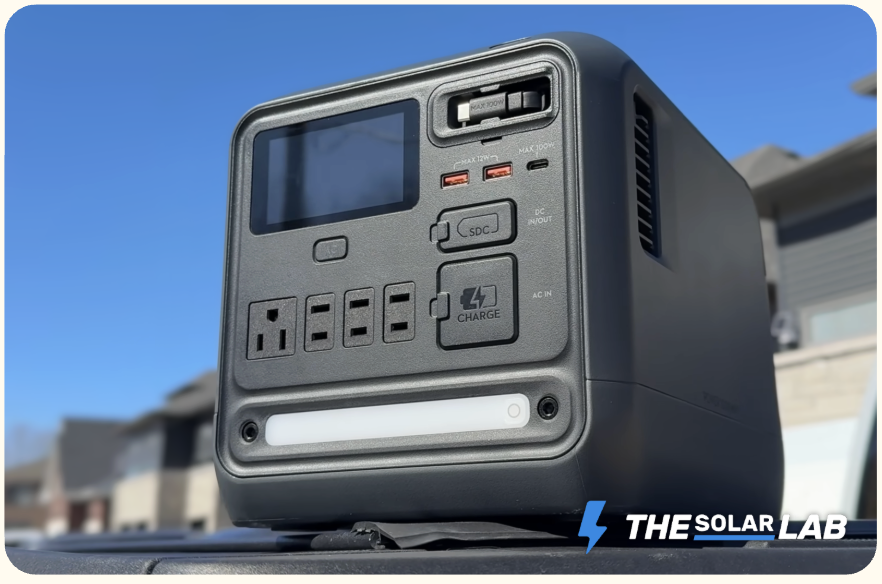
While having four AC outlets sounds great on paper, the layout makes them really difficult to use at the same time. Larger plugs, like laptop bricks or camera battery chargers, easily block more than one port each.
Plus, only one of the AC plugs is grounded. Having ungrounded ports works for charging most handheld devices, but it’s not going to do much for you if you want to use your 1000 Mini to run a coffee machine or anything else that features a grounded plug.
We understand that DJI wanted to make this thing as compact as possible, and part of that involves positioning plugs closely. However, in practice, it means a lot of people are going to need to plug a power bar into it, which kind of defeats the purpose of making the power station small in the first place.
Unlike many competitors, this unit isn’t expandable. If 1,008Wh isn’t enough battery capacity, you’d have to buy an entirely new power station. Just because a power station is small, it doesn’t mean that people don’t want the option to upgrade it in the future.
For example, take something like a Pecron E1500LFP, which features a 1,536Wh battery. You have the option to add two expansion batteries to that unit to increase your storage capacity to 7,680Wh. Given the Pecron power station is cheaper and you have the option to upgrade it, it makes sense that the Power 1000 Mini isn’t going to be for everyone.
Don’t get us wrong, the extendable charging cable is a really cool and useful feature. However, cable maxes out at 100W. That’s fine for most devices, but higher-end laptops and gear that support 140W charging won’t hit full charging speeds.
We know we’re being picky, but it’s worth pointing out, especially if you’re someone who views that cable as one of this unit’s most compelling features.
The DJI Power 1000 Mini is one of the most refined small power stations we’ve ever tested. It’s efficient, quiet, has DJI’s signature build quality, and genuinely feels like it would be practical for everyday use.
If you’re looking for something compact you can use for a home office UPS, you’re a content creator on the go, or you just want a well-made power station you can bring with you on camping trips, it’s a hit.
With that said, the need for an adaptor to solar charge is annoying, and the outlet spacing is a bit frustrating. Still, those drawbacks don’t outweigh its strengths for the right user.
If you want an extremely compact and portable power station that actually fits into your daily life, it’s an excellent option.
We test solar products so you don’t have to. Check out our opinions and which units we think are worth your money and which ones aren't.
More Reviews >