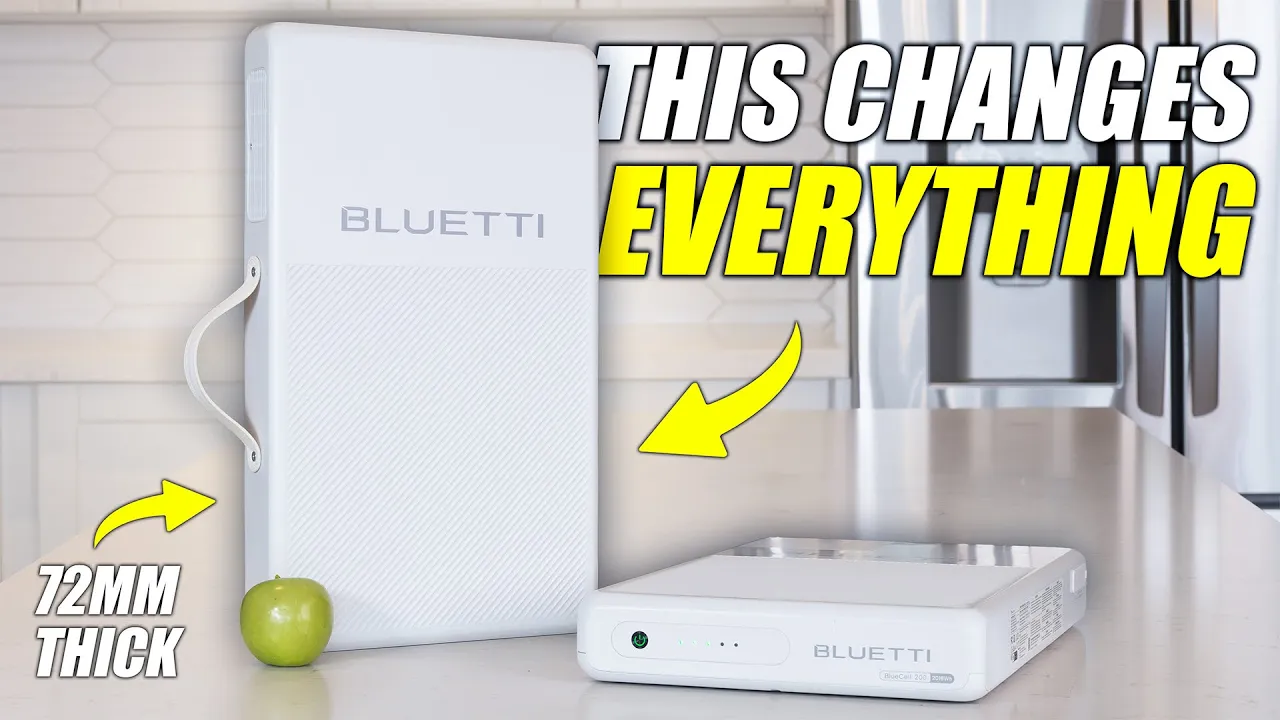
At this point, most portable power stations follow the same formula: a fairly bulky box with a handle, a display screen, and a bunch of input and output ports. The brand-new Bluetti FridgePower takes a different approach.
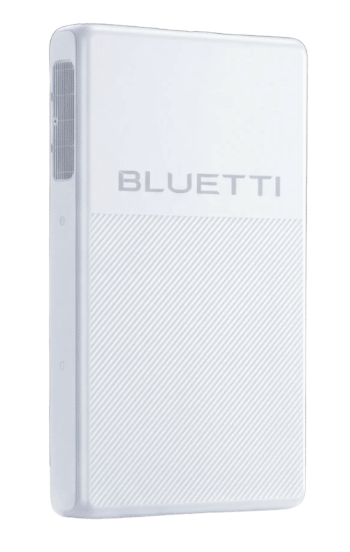
Instead of being a general-purpose power station, this is a purpose-built refrigerator battery backup system. It is a slim and low-profile battery with an inverter that was designed to pair with your fridge full-time.
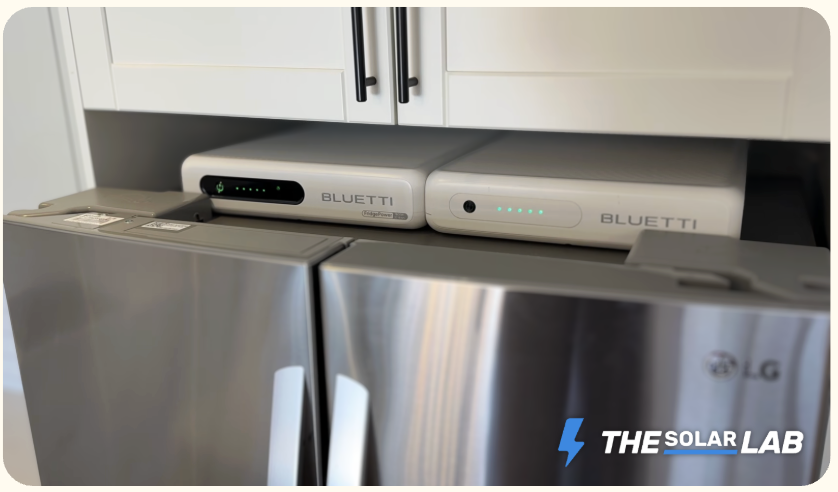
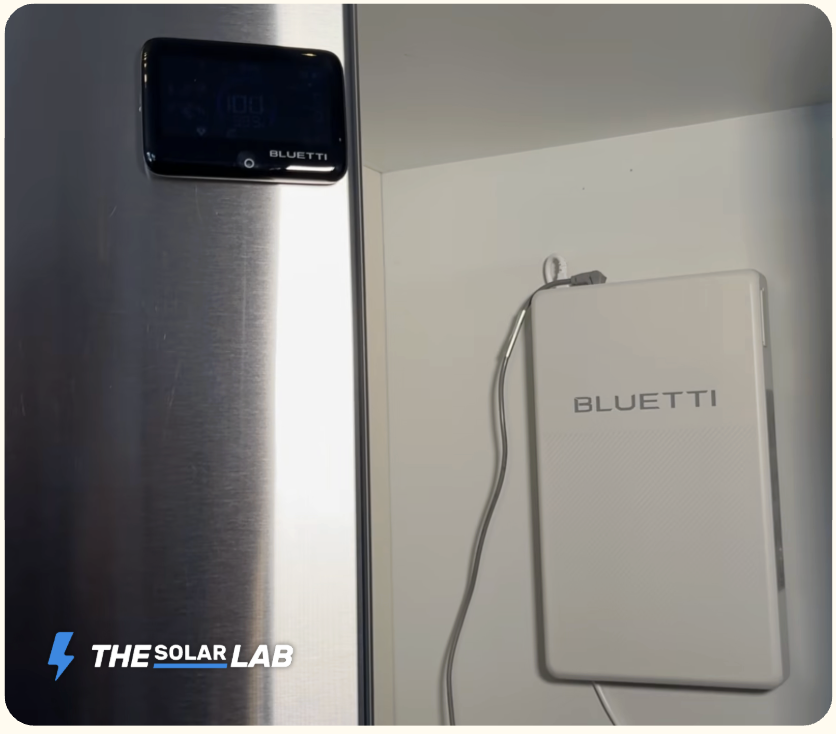
You can sit it on top of your fridge, mount it on a wall, or even hide it in a cabinet or closet. While it still functions just like a traditional Bluetti power station, it was built for a simpler and more specific purpose: reliable, always-ready backup power for your fridge.
Bluetti hasn’t fully released this unit yet, and it’s currently being promoted through Kickstarter, but we had the chance to test it for ourselves. And while it’s one of the more interesting ideas we’ve seen in a while, it’s not exactly perfect.
Bluetti FridgePower Specifications Breakdown
Before we get into our own experiences with this innovative Bluetti fridge battery, let’s take a look at what it’s supposed to bring to the table:
{{review-summary}}
The biggest difference between the FridgePower and pretty much any other portable power station is its intended purpose.
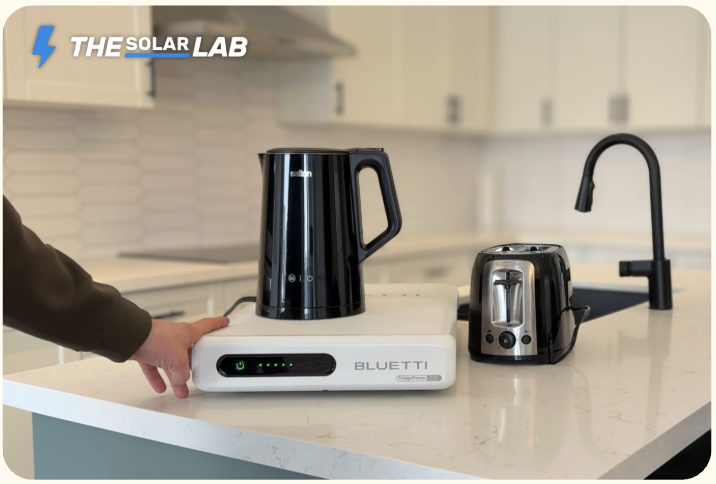
Take a Bluetti power station with a similar battery capacity and output, like the Bluetti Elite 200 V2, which has built-in handles, nine output ports, a built-in screen, and everything else you’d expect a power station to have. The Bluetti Fridge Power has minimal ports, a way slimmer build, no display, and is even built in a way that it can be mounted on a wall.
Basically, it’s designed to act like a smart UPS fridge backup, while the Elite 200 V2, or basically any other portable power station, is designed to provide power to just about any load that the inverter can support.
What this means is that the FridgePower stays plugged into your fridge at all times, quietly waiting in the background for when your fridge needs backup power. When the power goes out, it kicks in automatically and keeps your food from spoiling. If you have an RV, it provides dedicated power to your fridge when you can’t access an electrical hookup.
When you look at real-world power consumption, this approach actually makes a lot of sense. In our own testing of how much power a fridge uses, we calculated that most refrigerators use around 1,300Wh per day. This number can vary, but we tested several fridges in several different homes.
So, with the 2,016Wh battery the FridgePower packs, you could realistically deliver about a day to a day and a half of runtime. Add the FridgePower expansion batteries, which each have a capacity of 2,016Wh, and you can scale that up in a very predictable way
Basically, each additional unit equals roughly another day of runtime for your refrigerator. If you have a single goal in mind, like running one appliance with off-grid power for a set amount of time, this thing starts to make a lot of sense.
Now that you know what it is, let’s take a look at what we liked about this unit after we tested it:
The standout feature here isn’t the specs, it’s the design. This thing is so unique that it almost doesn’t even feel like a portable power station.
Honestly, it’s one of the first “power stations” we’ve tested that genuinely feels like it was built to disappear instead of being a very visible tool. At just 3 inches thick, it can sit on top of a fridge without being noticeable, you could mount it on the wall behind or beside the fridge, or tuck into tight spaces where a traditional unit simply wouldn’t fit. They even include an optional leather handle, which makes carrying it even easiser.
Not only is that a welcome change for those who want a more discreet setup, it opens up a lot of use cases beyond just refrigerator backup. For example, you could mount this near a sump pump, hide it in a trailer, slide it under a back seat in your vehicle, or install it in an RV without sacrificing valuable space.
Compared to the typical bulky and boxy design of a power station, this feels like a much more practical direction for the industry.
Bluetti added some genuinely useful smart features here, especially given this was designed to function directly as a backup power system, rather than being a hybrid between a backup battery and a portable power system for camping.
The app integrates with Alexa and Google Home, so you can check status with voice commands. It also includes a storm monitoring feature that automatically charges the unit when bad weather is approaching, which is something that actually adds real value for emergency preparedness.
Another standout feature is the automatic maintenance cycle. Every few months, the unit will discharge and recharge itself to keep the battery healthy. That’s the kind of hands-off functionality you want in something that’s supposed to sit quietly until you need it.
Because this unit is meant to be hidden, Bluetti kept the onboard display minimal. Instead of a built-in display, the unit has a few LED lights, and Bluetti offers an optional magnetic display that you can stick on your fridge or mount on a nearby wall.
Things like this seem like small details, but they work well and show Bluetti actually had real-world use in mind when they designed it. If you don’t want to rely on the app, you still have a convenient way to monitor your system without digging behind appliances.
Setup is also refreshingly simple. Whether you’re placing it on top of your fridge or mounting it to a wall, everything feels designed for quick installation without complicated wiring.
In testing, the FridgePower actually performed a lot better than we expected it to. It delivered about 81% efficiency, which is solid for a unit with this battery capacity and output power. It also charged faster than advertised at roughly 1 hour and 48 minutes using a standard AC wall outlet.
The idle consumption came in at around 16.8W, which isn’t exactly ground-breaking, but is fairly typical for a “power station” with a 1,800W inverter. To help with efficiency and idle consumption, the unit also includes sleep modes and efficiency settings you can access through the app or magnetic display. These settings help reduce unnecessary power loss when the unit isn’t supplying power to your fridge (or whatever else you want to use it for).
And while this unit was clearly designed for indoor use, the inclusion of solar input is a nice bonus. If you’re dealing with an extended outage, you can take it outside, recharge it with solar panels, and bring it back in.
They didn’t have to include solar charging, but it’s a thoughtful addition that we think a lot of RV and camper van users will appreciate. It’s also something that could be practical for tiny homes, as you would have the option to run a dedicated line to a solar panel array.
While there was a lot to like about this innovative take on the traditional power station build, it was not without its faults. Hopefully, they correct some of these issues before this thing is released for sale, but here are some of the things we really didn’t like about it:
One of the biggest frustrations we ran into wasn’t with the hardware, it was with the information that Bluetti provided when they sent it to us.
The initial specifications sheet and marketing materials included several claims that didn’t line up with our real-world testing. For example, Bluetti advertised significantly lower idle consumption than what we actually measured. They even said it has a lower idle consumption than the EcoFlow DELTA 2 Max, which just isn’t true.
Publishing exaggerated claims and straight up misinformation is not an issue that is unique to Bluetti. Unfortunately, it’s pretty common in the portable power space, but it’s still something you should be aware of. Our suspicion is that a lot of these brands are based out of China, so maybe there’s translation issues, or just less hesitation to exaggerate stuff, but it’s frustrating.
If you’re considering a unit like this, it’s worth relying on independent testing rather than marketing claims alone. It’s also worth noting that a lot of YouTubers and other content creators will just repeat the information that is sent to them, rather than testing it for themselves. Again, just be a little hesitant when reading the information on Bluetti’s website.
There are a few design choices that feel unnecessarily restrictive. The magnetic display isn’t included, which is frustrating for a product designed to be hidden. You can pick one up for just $48, but why not just include it with any purchase of the main FridgePower unit.
The solar charging cable is also sold separately, which could be a problem if you need it during an emergency. A lot of people will just assume they have every cable they need when they purchase it.
Even more surprising is the lack of USB ports on the main unit. If the power goes out, you can’t just plug your phone or other portable devices, which would be hugely helpful. Weirdly, they did include a USB-C port on the expansion batteries. Why not just include one on the main unit? It makes no sense.
To achieve its slim design, it seems like Bluetti used lighter plastics for the body. Not only is the plastic thinner than we usually see used for power stations, the slim and elongated design makes it more fragile than a power station with a boxier build.
Basically, the unit feels more fragile than a typical power station, and in our testing, even a small drop caused noticeable damage. That doesn’t mean it’s poorly built, but it does mean you’ll want to be really careful with it, especially if you’re used to working with more rugged power stations.
On the plus side, this is meant to be more of a set it and forget it battery system, so you really don’t have to move it or risk damaging it if you set it up how Bluetti intended.
The expansion system works, but it’s not as polished as it could be. You can’t stack the batteries on top of each other, which is odd for a product designed to sit on top of a fridge.
Instead, adding more capacity often means placing batteries directly beside each other, or mounting additional units on a wall. This can complicate your setup, and means the batteries are probably going to be a lot more visible than they need to be.
Solar charging is also limited to the main unit. If you have multiple batteries, you can’t charge them independently. Instead, you’d have to bring the entire system out to your solar panels and charge everything together. If they each had their own dedicated solar input, you could just charge them one at a time.
The FridgePower isn’t trying to be everything, and that’s exactly why we think it would work for certain buyers.
If you’re looking for a traditional Bluetti power station that can run a wide range of devices, something like a Bluetti Elite 100 V2 or even the higher capacity Bluetti Elite 400 would still be the better choice. These units are bulkier, but they’re more versatile, have more features, and they’re just better suited for general use.
However, if your goal is really simple, like supplying reliable backup power for a fridge, freezer, or sump pump, this is one of the most interesting options we’ve seen. It’s compact, very easy to install, and designed to stay out of your way while still being ready when you need it. And that’s a niche that hasn’t really been explored by power station companies until now.
At the same time, it still feels like a first-generation product. There are a few quirks, some missing features, and areas where Bluetti could improve.
The Bluetti FridgePower might not be perfect, but we hope it points to something bigger. Power stations don’t all need to be bulky boxes anymore. There’s clearly room for more specialized, space-efficient designs, especially for things like refrigerator battery backup and always-on emergency systems.
It almost feels like this is one step closer to a hybrid version of a portable power station and a traditional solar power system, and that’s a really good thing.
If Bluetti (and other brands) continue refining this concept, we could see a whole new category of smart, appliance-specific backup power systems emerge.
We test solar products so you don’t have to. Check out our opinions and which units we think are worth your money and which ones aren't.
More Reviews >