This year’s ice storms left tens of thousands of people without electricity across the United States and eastern Canada. These storms were a serious reminder of just how fragile the power grid can be.
Since then, we’ve been flooded with emails and YouTube comments asking pretty much the same thing: “What affordable power station can keep the lights on and fridge running when the grid goes down?”
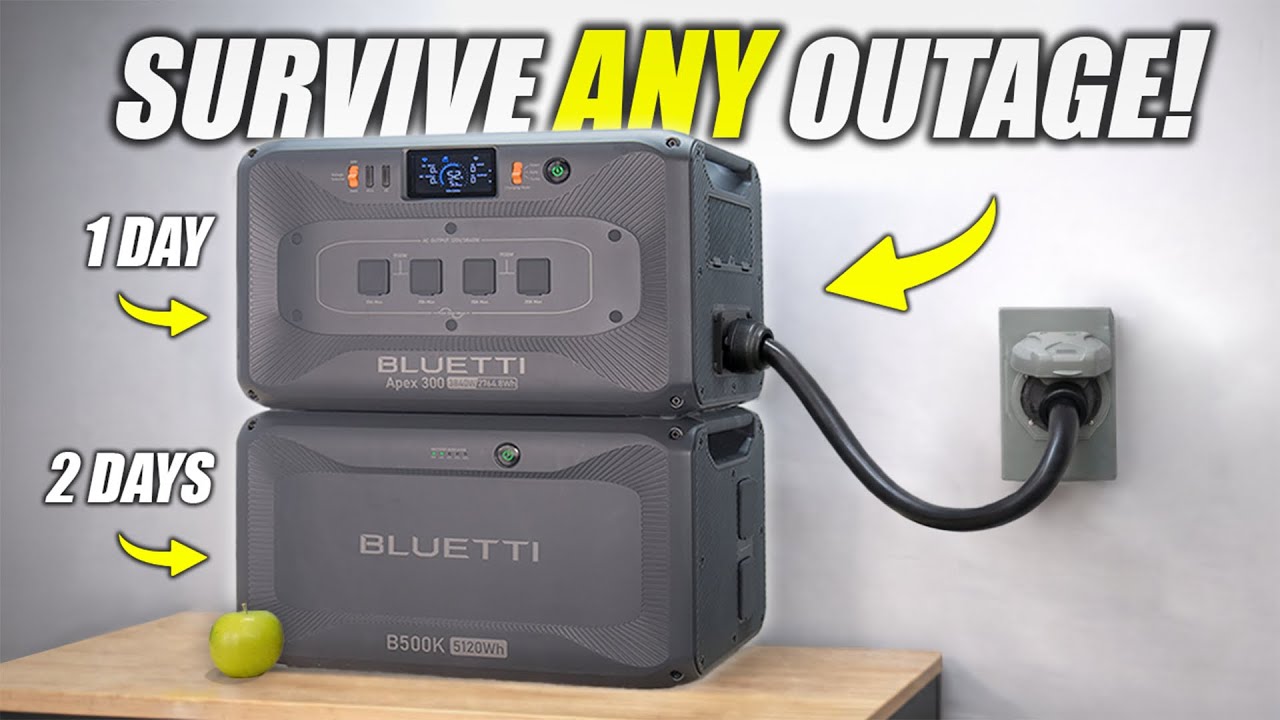
They’re fair questions, and we’re not surprised so many people are looking for backup power that doesn’t cost a fortune. Luckily, you don’t need to spend tens of thousands of dollars on a whole-home solar power system or a high-end unit like an expanded EcoFlow DELTA Pro Ultra for basic emergency power.
Those types of backup power systems have their place, but most people don’t need to power every circuit in their house. They just want to get through a power outage in comfort by keeping their fridge cold, phones charged, lights on, and medical equipment running.
To help you achieve just that, we’re going to focus on affordable, reliable power stations that make sense for basic emergency prep. These units aren’t overly expensive, but they’re also not cheap amazon junk, so they’ll actually last. Each unit was tested and reviewed by us, and every recommendation has a reason behind it.
For most homeowners facing a storm-related outage, you’ll just need power to run a fridge, lights, and charge basic electronics. This means you don’t need a unit with a huge inverter output.
For example, fridges usually only spike briefly when the compressor kicks on, and even then, they’re only using a few hundred watts. Phones, lights, routers, and laptops barely move the needle. For these types of power outage backup systems, battery capacity matters more than raw inverter size.
You also don’t need to worry about a permanent install, transfer switches, or hiring an electrician if your goal is basic emergency prep and comfort. A good portable power station that you can roll out when the lights go out can be a practical and stress-free solution.
If you just want to cover the basics for a power outage that lasts a few hours or a single day, this is all you really need to pay attention to:
Battery Capacity (Watt Hours): The higher the Watt hours (Wh), the longer your power station will be able to run, as this number refers to the size of the battery inside your power station. For a basic outage, any efficient power station with a capacity over 1,000Wh is going to be useful.
Inverter Output (Watts): This number, measured in watts (W), determines what types of loads you can plug into the unit.
More demanding loads, like kitchen appliances, require a more powerful inverter than something like a desk lamp. If you need to run multiple things at the same time, you’ll also need to account for that and select a power station with an output rating that can meet the total wattage of all of your loads.
Ports and Outlets: You’ll want a unit that has enough AC outlets to run all of your electrical loads, as well as the USB and 12V ports you need to charge phones and laptops. Everyone’s needs are different, so think about what you plan on running during an outage and buy accordingly.
Weight and Portability: When you’re talking about power outage prep, you may need to move the unit from room to room, or even from the basement or garage into your main living space. For most people, we recommend a lightweight unit, or a power station that has built in wheels and a sturdy handle.
Expandability: Choosing an expandable power station means the unit’s battery capacity can be increased in the future by adding extra batteries.
It’s not strictly necessary, but we always like having the option to upgrade a setup in the future. Who knows, your budget or power needs may grow in the future, so it’s always nice having the option to step things up without having to buy an entirely new power station.
Now that you know what matters most when you’re talking about a power station for backup power, we can jump into our top picks.
It’s worth clarifying that this list isn’t definitive, and there are plenty of other high-quality power stations we’ve tested that would work really well for home backup. Still, we wanted to help narrow down the options to a few reliable units that would work very well.
It’s also worth noting that the best power station for backup power and outages is always going to be the unit that most closely matches your unique needs. Consider what you actually want to keep running during an outage, what you can afford, and if you want something you can upgrade in the future.
If you’re unsure about your own power needs, use our Power Consumption Calculator. Once you know your energy usage, we’d recommend taking a serious look at one of the following units:
If you want the most battery capacity for your money, the Pecron E3600LFP Portable Power Station is pretty much impossible to ignore. It’s a powerful unit with a big battery from a more budget-friendly brand, but the value here is honestly kind of wild.
For one low price, you’re getting a 3,072Wh LiFePO₄ battery paired with a 3,600W output, so you can comfortably run a fridge, lights, and multiple devices at the same time.
What makes the E3600LFP especially appealing for outages is that it doesn’t pretend to be something it’s not. It’s not a luxury power station, but it’s reliable, straightforward, and capable. You have the option to expand it with additional batteries or even pair it with a second unit if you want a higher output and more battery power down the road.
Speaking of which, Pecron even carries an E3600 Bundle that gives you two units and a 240V Hub that allows you to connect them together. Aside from the crazy cheap price, the advantage here is you can run 240V loads, like appliances and power tools. You can even split them apart if you want to use one unit in the kitchen and another in your living room.
Keep in mind it’s a bit heavy compared to smaller units on our list, but you’re getting great value. You also have the option to expand it for multi-day power outages in the future.
If the E3600LFP feels like more than you need, the Pecron F3000LFP is a solid alternative. It keeps the same value-driven mindset but in a slightly smaller package that still works well for fridges and other basic backup applications.
The Anker C2000 Gen 2 is a well-balanced power station that’s powerful enough to be a practical unit for basic backup, but also has a real premium look and feel.
You get a solid-sized battery, a capable 2,400W inverter, and one of the best port selections in this power station category.
For power outage use, this thing just works. It’s powerful enough to run a fridge and essential loads without stress, and the port layout makes it easy to power multiple devices at once without adapters or plugging in a power bar.
You also have the option to add a single expansion battery to double the capacity. It also has a low idle draw, and the dual handles means it’s surprisingly portable for a unit that weighs in at 42 lbs.
It’s also priced under $1,000, which is impressive given Anker is a premium brand with some of the best customer support in the industry.
However, if that price point still feels a bit high, the Anker SOLIX C1000 Gen 2 deserves a mention. It’s basically the same philosophy in a smaller package.
The Anker C1000 Gen 2 has a 1,024Wh battery, but retains a 2,000W inverter. You also get five AC outlets in the form of a lightweight unit that charges incredibly fast.
On paper, the Bluetti Elite 400 is a bit unusual. It has a lot of battery capacity paired with a relatively modest inverter. But for emergency backup, that’s actually a good thing. If you’re just trying to run the basics during a power outage, you don’t need a powerful inverter, just high enough battery capacity to get you through a day.
Let’s be real, nobody needs to run a dishwasher or table saw during a power outage. Realistically, you’re going to be plugging in your fridge, some lights, and charging a few electronics.
The Elite 400 lets you pay for battery capacity you need, instead of wasting money on inverter output you’ll never realistically use.
That translates to a longer runtime where it actually matters. Since it packs a relatively large battery, you also don’t need to worry about buying expansion batteries, which don't just add to the the total cost, they can complicate things if you're just looking for something you can set up quickly when the power goes out.
Portability is another big win here. The Elite 400 has an extendable handle and some rugged wheels, so it’s easy to roll out when the power goes down. Even though that big lithium battery makes it pretty heavy, it’s super easy to pull it out when things go sideways.
For basic home backup, this Bluetti power station is pretty much the perfect go-to solution.
EcoFlow has released a lot of power stations lately. In fact, they’ve released so many units with such confusing names that we had to release a video clearing things up.
With that said, the new DELTA 3 Plus Power Station stood out because it doesn’t try to do everything at once. Instead, it focuses on being a fast charging, lightweight, and well-rounded power station. These are also the same qualities that make it ideal for a short-term power outage.
For outage prep, this unit’s fast charging capabilities alone are a big deal. If you get a storm warning and only have a short window to prepare, being able to top up the battery quickly is huge. With an AC input of 1,500W and a solar input of 1,000W, you’re talking less than an hour to go from a dead battery to a fully charged power station.
At just 27 pounds, the unit is also light enough to move around the house easily. This makes it more practical than some of the heavier alternatives in this category.
One of the things that impressed us the most was EcoFlow’s decision to make this unit backwards compatible with their older expansion batteries. If you want to increase its storage capacity, you don’t have to go out and buy the latest battery, you could even connect it to something EcoFlow released years ago. This is a very buyer-friendly decision, and allows you to score a deal on an extra battery.
It’s not designed to replace a whole-home system, but it absolutely nails the “keep the basics running”. Given you can pick it up for well under $1,000, it’s a practical and affordable option for backup power, camping, remote work, or any type of emergency prep.
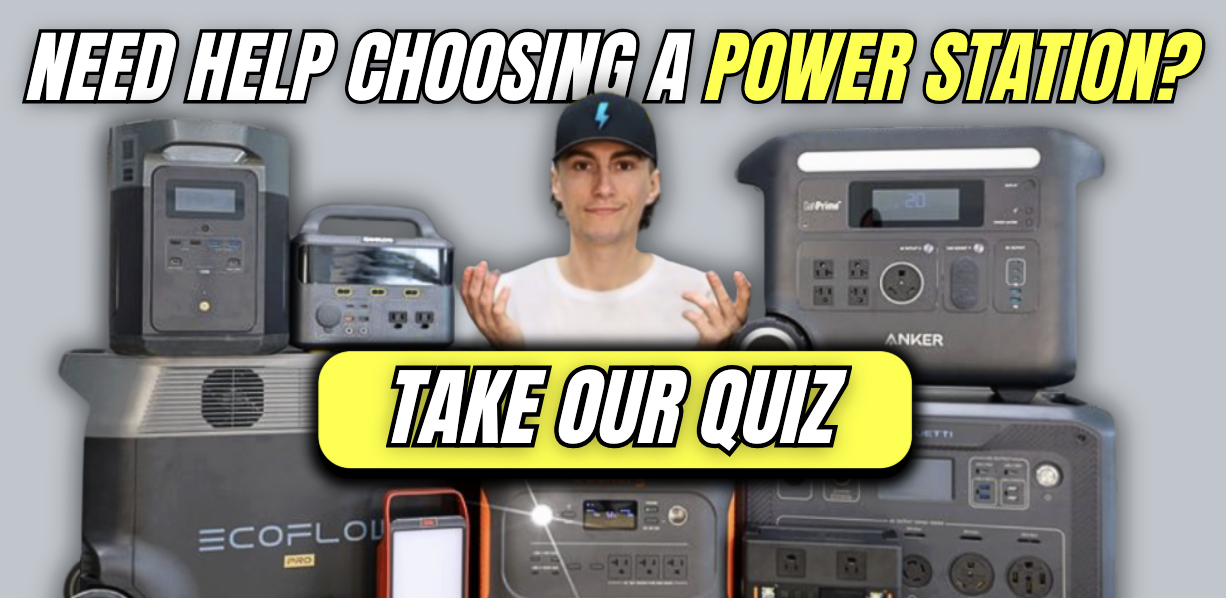
Not every outage lasts more than a few hours, and not everyone needs to run a fridge. If your main goal is keeping phones charged, powering a few lights, and staying connected while you wait for power to come on, there are some smaller units can still make a lot of sense.
Power stations like the Anker C300X, Pecron E1000LFP, and the new EcoFlow DELTA 3 1000 Air are usually under the $300 mark and are miles better than the no-name junk floating around Amazon.
They won’t run major appliances, but they will give you reliable power when you need it. They’re also small enough that you can easily toss them in a closet or the trunk of your car.
For apartments, condos, or as a secondary source of backup power, these smaller options are often a smart and affordable safety net.
If the ice storms at the start of 2026 taught us anything, it’s that you don’t need an expensive and complicated setup to be prepared, you just need a thoughtful one. A fairly basic portable power station from a reputable brand can turn a stressful outage into a minor inconvenience, and you don’t have to spend a fortune to be prepared.
Whether you want a bigger unit that can comfortably run a fridge and few other basic appliances, or a smaller one that keeps your essentials powered, there are solid, affordable options out there that actually work.
All of the units highlighted above would do the trick, but you have plenty of other options out there. If you want a more comprehensive list, check out our Best Big Power Stations of 2025 and Best Small Power Stations of 2025 buyer’s guides.
Explore more practical tips, guides, and insights to help you get the most out of solar
More Resources >