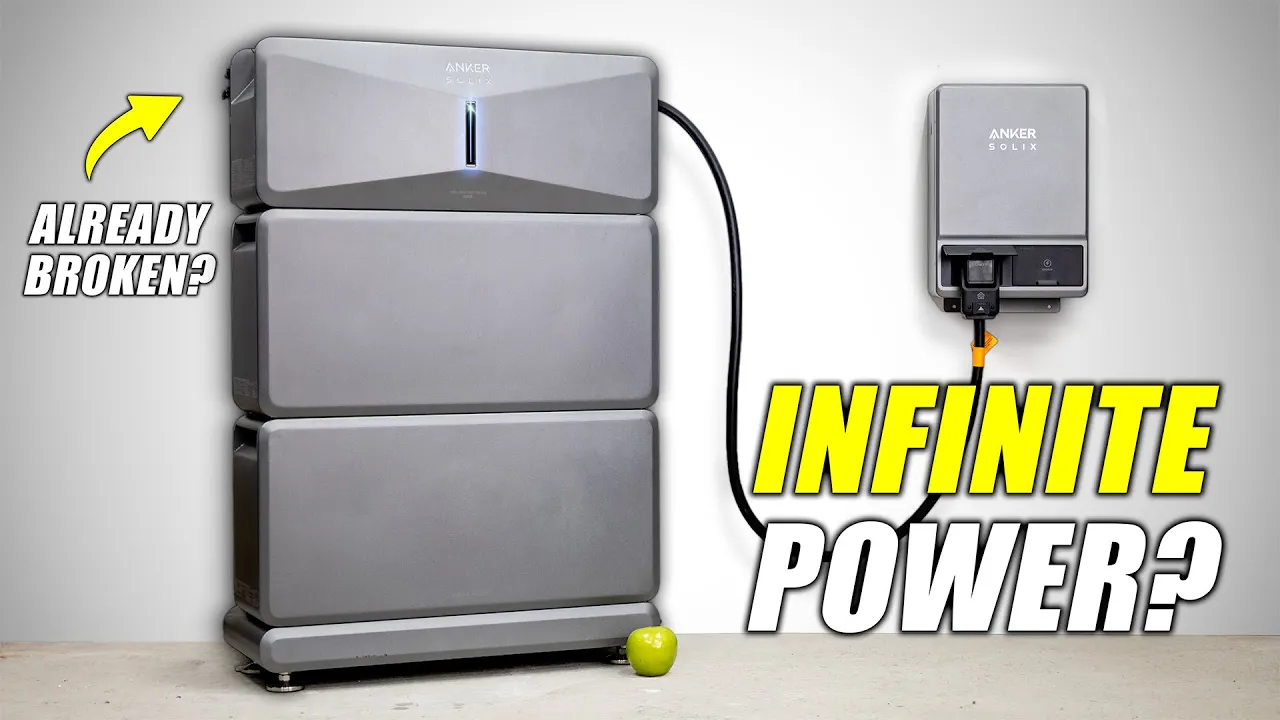
If you’re in the market for a simplified home backup system, you’re going to come across two systems: the Anker SOLIX E10 and the EcoFlow DELTA Pro Ultra.
Both are positioned as premium solutions for home backup power, and both promise to deliver serious performance. They’re extremely scalable, can integrate into your home with transfer switches, and they’re built by two of the most recognized brands in the industry: Anker SOLIX and EcoFlow.
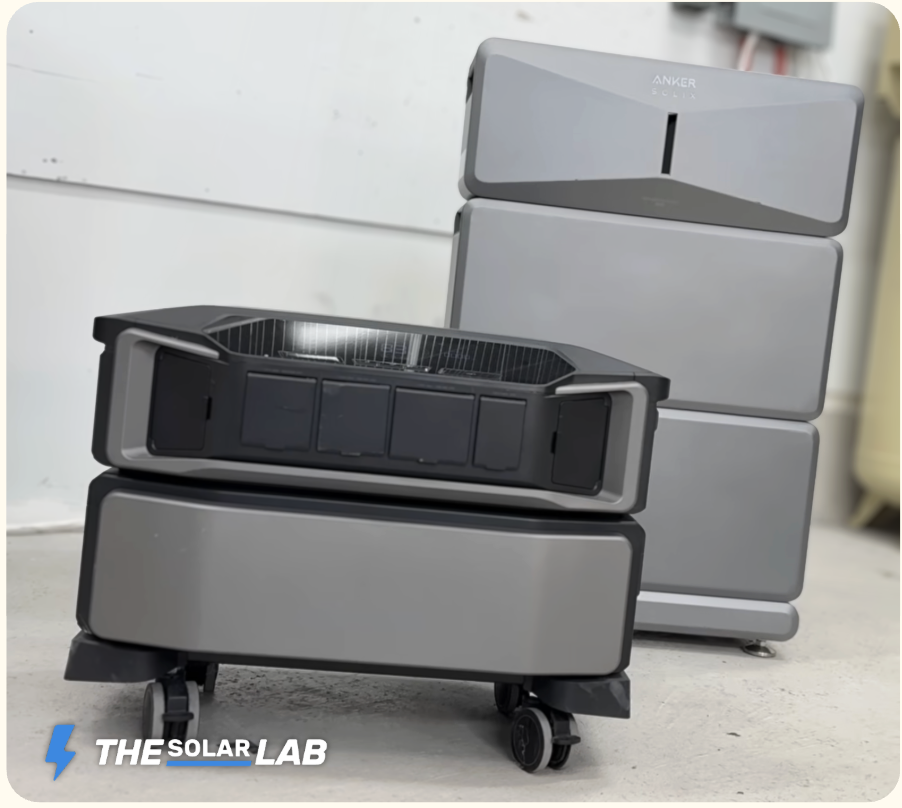
On paper, they’re direct competitors, but once you get past the specifications, these two systems start to feel very different. The E10 feels like a modern, simplified version of a traditional solar + battery setup. The DELTA Pro Ultra is more of a traditional portable power station, but ramped up in scale and made modular for whole-home power.
We’ve tested and really liked both systems, so we made this breakdown to help you understand how they compare, and which one you should spend your money on.
At their core, both the Anker E10 and the EcoFlow DELTA Pro Ultra were designed to achieve the same aim: give people a reliable and scalable backup power system that is simpler to use and install than a traditional battery and inverter setup.
Even though they were designed to do the same thing, and they have similar specifications, they way the function is actually very different.
The Anker SOLIX E10 is designed like a streamlined energy storage system (ESS). Basically, it’s a clean and minimalist version of a traditional solar and battery system.
It’s meant to be unboxed, components connected together, and then left alone to do its thing. It prioritizes simplicity, clean design, and long-term integration into your home. It was never meant to function like a portable power station, where you plug your devices and appliances directly into the unit.
Instead, the batteries and inverter snap together wirelessly, then the main inverter unit is connected to your home via a Smart Home Panel or a transfer switch.
The EcoFlow DELTA Pro Ultra still leans into its identity as a portable power station, even though its modular design means it can scale into a full home power backup system.
Since it has built-in input and output ports, including 120V plugs and USB ports, you have the option to use it as a standalone power station. Similar to the E10, you can also plug the DELTA Pro Ultra into the EcoFlow Smart Home Panel 3 for more direct home backup power.
It’s designed to be flexible, adaptable, and usable in a wide range of scenarios beyond just your home. Not only does it have those ports, it also has built-in wheels and a display screen, making it more practical for RV power, or even something you can take with you to an off-grid property.
So, they may have the same purpose, but the two systems function very differently. And, as you’ll see with the table below, they even have extremely similar specifications.
Although they’re similar in price if you’re comparing the price per inverter and battery, the Anker E10 requires a minimum of two battery units in order to achieve its full 7,600W continuous output. Meanwhile, you only need to pair the DELTA Pro Ultra inverter unit with a single battery.
If you’re just looking to get started at the lowest price possible, this means you can save about $2,000 by going with an EcoFlow DELTA Pro Ultra.
Keep in mind that the prices included in the table above include our discount codes, and the DELTA Pro Ultra was released much earlier than the Anker SOLIX E10.
Still, savings of roughly $2,090 and a more plug-and-play design mean there are fewer barriers to entry with the EcoFlow power station.
Now that we’ve taken a look at how they differ in design, as well as their specifications similarities, let’s take a look at the areas where each backup power system shines.
Let’s start by taking a look at all of the things that stood out to us with the Anker SOLIX system:
One of the most impressive aspects of the Anker SOLIX E10 is its 9,000W solar input.
A 9,000W solar input isn’t something you see on even the biggest power stations. In fact, it fundamentally changes how you can use this system and enables it to directly compete with traditional solar power systems.
With a large enough solar panel array, you can realistically recharge a multi-battery setup in just a few hours. Whether you’re looking into traditional solar power systems or you want a high-capacity solar generator setup, the E10’s ridiculously high solar input makes it a compelling option.
Plus, if you are looking at building a solar system, having everything run through a single, space-saving system helps simplify the entire setup.
The E10 is one of the cleanest systems we’ve ever worked with from an installation standpoint.
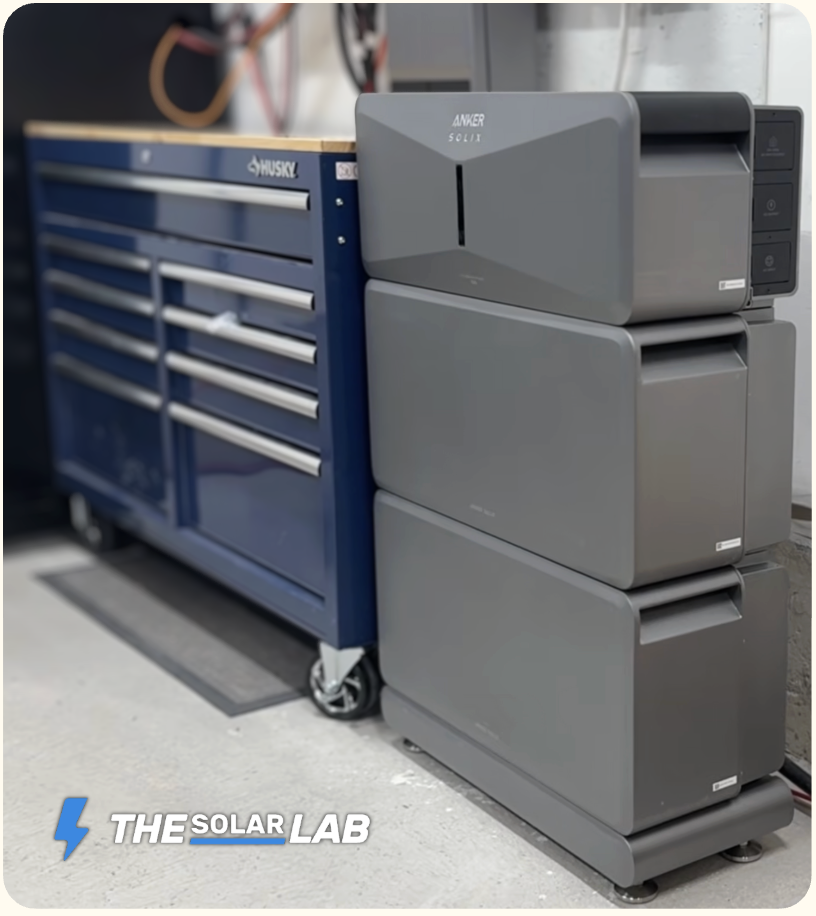
The inverter literally sits on top of the battery and connects just by directly snapping into place. That’s right, there are no cables, and there’s no complicated wiring required. You stack the batteries beneath the inverter almost like they’re LEGO blocks.
We’ve never seen any sort of power storage system that assembles this cleanly. It genuinely makes server rack batteries seem sloppy by comparison.
Even if you want to integrate the system with the Anker SOLIX Power Dock, or Anker’s more budget-friendly Smart Transfer Switch, wiring is limited and everything is color-coded. Just like the E10 inverter and batteries, it all just clicks into place.
Snapping all of the components together couldn't have been easier, and it feels like the whole system was designed for simplicity. Not only is it easy, the finished product looks really clean and modern.
These are things that we think would be a big deal for homeowners who just want simplified home backup power, as well as a system that isn’t going to look out of place in the basement, garage, or even a primary living space.
When we ran the Anker E10 through our usual real-world test, we discovered that it could handle demanding loads extremely well.
Keep in mind that this system already supports a continuous output of 7,600W, so we’re talking about serious power when we were testing the surge capabilities.
High-demand appliances and tools, like large air conditioners and power tools, require stable, continuous power. The E10 delivers that consistently, without the hesitation or instability we’ve seen in some other systems. If you plan on running multiple appliances simultaneously, or even a single load with high start-up requirements, the E10 delivers.
By contrast, the EcoFlow DELTA Pro Ultra surges a little inconsistently. We created a dedicated video where we tested the EcoFlow DPU’s output capabilities, and while we found it performed fairly well, it did struggle to deliver smooth output power under the more demanding loads.
This was particularly apparent when we used it to supply power to a car lift, which ended up stuttering and really struggled to lift a vehicle. The Anker E10 handled this same task with ease.
Remember, surge performance is not just about hitting high numbers on paper. It’s about delivering that performance reliably every time, which is critical in a whole-home backup power scenario.
Another subtle but important advantage you get with the E10 is the cooling system. Rather than relying on active fans and vents, like most power stations, the Anker E10 uses heat dissipating fins.
What that means is:
For something that’s likely to live inside your home, cabin, or RV long-term, that added reliability and lack of noise can make a difference.
While it’s not the most open ecosystem, meaning it’s not compatible with other Anker power stations, the E10 does offer flexibility in how it can be used.
You can run it with a simple transfer switch, integrate it with Anker’s Smart Inlet Box, or scale it into a full system using the Anker E10 Power Dock. You can even tie in multiple units and pair them with the Anker SOLIX Smart Generator 5500.
It’s a relatively new product, but Anker has already built a whole system of accessories that allow you to customize the E10 into a true whole-home backup system.
Now that we’ve sung the praises of the Anker SOLIX Whole Home Backup System, it’s time to shine some light on the older (and cheaper) EcoFlow DELTA Pro Ultra:
Right away, the EcoFlow DELTA Pro Ultra stands out immediately because it’s usable right out of the box. All you need to do is connect a DELTA Pro Ultra Inverter to a single DELTA Pro Ultra Smart Extra Battery and you’re good to go.

Once connected, these two components provide you with direct access to AC outlets, USB ports, a true 30A RV plug, a twist-lock generator input/output, and all of your input ports.
Just like any standard power station, these are all built directly into the unit, without the need to attach adapters or additional components. That might seem basic, but it completely changes how you use the system day-to-day when compared to the E10.
With the Anker E10, you don’t really have a way to pull power from it without some sort of cable or adaptor, as the unit does not have any built-in output ports.
This plug-and-play design also means you’re not as locked into a fixed installation with the DELTA Pro Ultra. While it is heavy, you have the option to use it anywhere, whether that’s inside your home during an outage, while using your RV, or at a secondary, off-grid property.
It makes the unit more versatile for everyday use, not just peak shaving and emergency backup power.
The EcoFlow App is a far more advanced and user-friendly platform than the Anker equivalent.
With EcoFlow’s smart app, you can monitor usage in detail, adjust system behavior, and even set up features like peak shaving, which can help reduce electricity costs over time. The level of control you get feels much closer to a full smart energy system.
Plus, the EcoFlow DELTA Pro Ultra has a built-in display screen, so you’re not tethered to a portable device to understand what’s going on with the system.
And, while you can enjoy a lot of the same functionality with the Anker SOLIX E10, the unit does not have a screen, and the app feels limited. It works, but doesn’t give you the same experience, which is surprising given that most people are going to spend around $6,000 just to get started with the E10.
For that amount of money, we expect a much better user experience. Come on, Anker!
One of EcoFlow’s biggest advantages is its Smart Home Ecosystem. Basically, EcoFlow has built a massive range of accessories and cross-compatible products that allow you to build a custom system that works for your lifestyle.
The DELTA Pro Ultra works with a wide range of accessories and integrations, including EV chargers, gas generator adapters, and other EcoFlow components. That compatibility makes it feel like part of a much larger system rather than a standalone product.
With the E10, you’re largely confined to the E10 system, which is more limited. While we admit this is a little unfair, as the Anker E10 was just released and the DELTA Pro Ultra has been out for nearly two full years, it seems like Anker has no intention of enabling the E10 to integrate with their other power station systems.
Even though it’s heavy (70 lbs for the inverter, 116 lbs for each battery), the DELTA Pro Ultra is still a much more portable unit than the Anker E10 system.
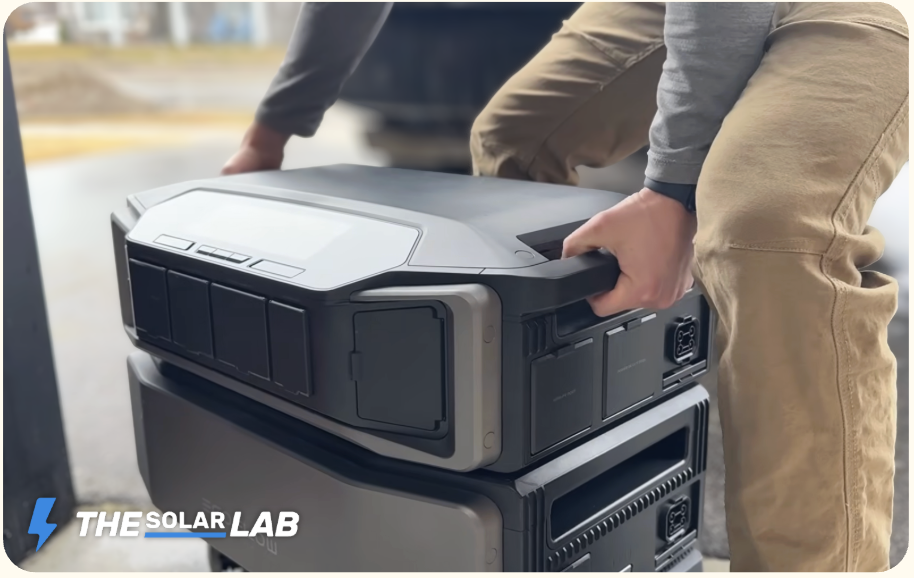
If you need to carry it up a flight of stairs, or drop it in the trunk of a vehicle, you can easily separate the inverter and batteries. EcoFlow also offers a wheeled trolly that is capable of supporting a multi-battery system, so you have the option to pull the unit to different areas of your home.
Since you can also use it without needing to integrate it into your home’s electrical panel, the DELTA Pro Ultra’s portability is genuinely practical. You could purchase it for home backup, but still enjoy using it in the RV, while visiting a cabin, or for any other temporary application.
It’s not something you’ll carry around casually, but the option to move it is a huge advantage. By contrast, the E10 is designed to stay put.
With the EcoFlow power station, you only need a single battery to unlock the full inverter output. That makes it significantly more affordable upfront compared to the Anker E10, which requires two batteries to unlock its full potential.
For most people, that lower barrier to entry is going to make the DELTA Pro Ultra a much more appealing purchase. Plus, the DELTA Pro Ultra has been on the market since early 2024, and EcoFlow just launched the DELTA Pro Ultra X, so the original unit tends to go on sale often.
Speaking of the DELTA Pro Ultra X, it’s worth noting that this updated version of the platform does add some new features. Most importantly, the newer unit increases the solar input to around 10kW, which actually eclipses the Anker E10’s 9kW solar charging capabilities.
But even with those upgrades, we still think the original DELTA Pro Ultra offers better overall value. The added complexity and cost don’t really translate into a better experience for most users, which is why we wanted to compare the E10 to the older model.
If you’re interested in seeing how the two EcoFlow power stations stack up, we actually put together a separate buyer’s guide: EcoFlow DELTA Pro Ultra vs DELTA Pro Ultra X
The Anker SOLIX E10 is an impressive system. It’s clean, powerful, and clearly designed with long-term home integration in mind. The cable-free way you connect the batteries to the inverter is genuinely one of the coolest design features we’ve seen from any brand in a long time.
If you want something that feels like a simplified version of a traditional solar setup, the Anker E10 is a really strong option.
But when you look at the bigger picture, the EcoFlow DELTA Pro Ultra is simply more practical. In our opinion, that makes it a better all-around product.
It’s easier to use, easier to move, more versatile, and, most important, it’s more affordable to get started with. It works just as well for home power backup as it does for off-grid or mobile applications, which we think makes it a better fit for most people.
The bottom line? If you want a fixed, install-and-forget home backup power system, the Anker SOLIX E10 delivers a clean and powerful solution. But if you want the most flexible, user-friendly, and cost-effective power station for backup power, the EcoFlow DELTA Pro Ultra is still the better choice in 2026.

We test solar products so you don’t have to. Check out our opinions and which units we think are worth your money and which ones aren't.
More Reviews >